




Composite Vs Porcelain Veneers – Your Comprehensive Guide

If you crooked, chipped, or permanently stained teeth, veneers are one of the most aesthetically pleasing, durable, and time-tested options. However, while searching for veneers over the internet, you might have come across terms such as “porcelain veneers” and “composite veneers”, and you might be wondering what is the difference between these two types of veneers. The purpose of this article is to provide a comprehensive overview of dental veneers, and to explain their different types. So. continue reading to find out everything you need to know about veneers. 

What Are Dental Veneers? What Are Its Types And Benefits?

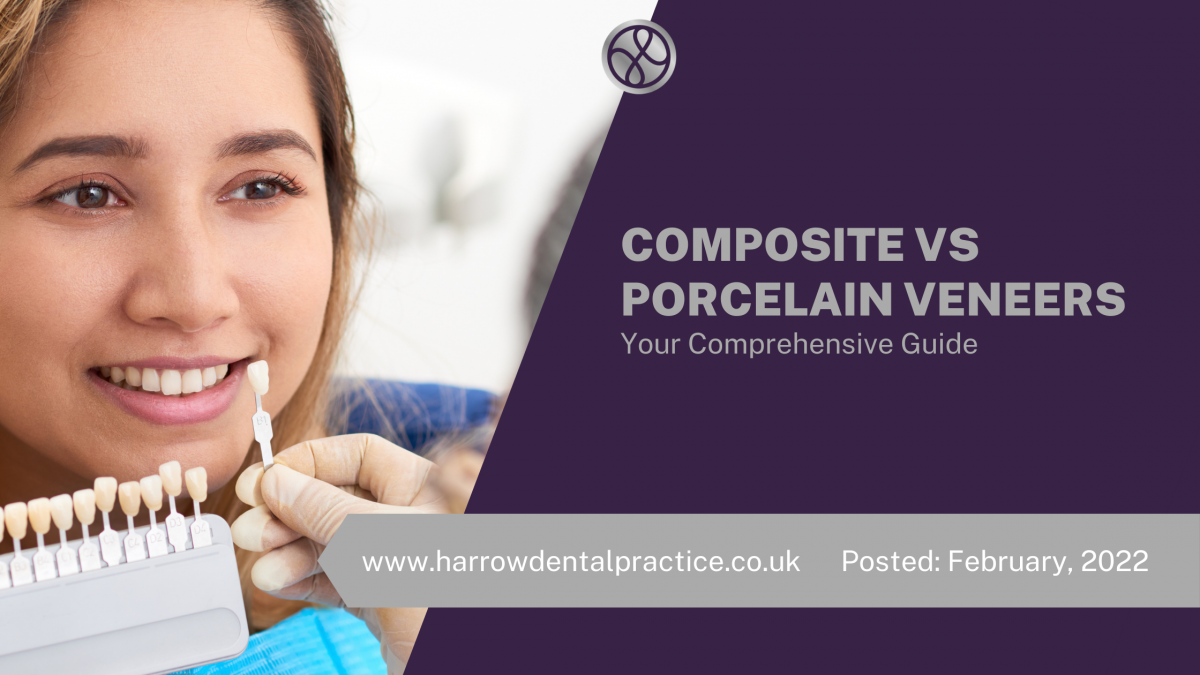
According to the British Academy of Cosmetic Dentistry, a veneer is an ultra-thin shell of porcelain or composite resins. Veneers are attached to the front surfaces of the teeth and are used for masking tooth defects or to restore structural damage in teeth. Generally, there are two main types of veneers; porcelain and composite veneers. Both types of veneers are fabricated in the dental laboratory, and each has its own merits and demerits. 

How Do Dental Veneers Work?

A veneer works as a mask or covering for the teeth, and helps in hiding various cosmetic and structural tooth defects. Your dentist will remove a thin layer of the outer enamel of the damaged tooth. This is done to create space for bonding the veneers. The prepared veneers are then bonded to the tooth using adhesive. 

What Are The Pros And Cons Of Dental Veneers?

Veneers are an increasingly popular procedure for treating cosmetic dental issues. Some of the pros and cons of veneers include:

  • Pros of Dental Veneers
      1. Can be used for smile makeovers 
      2. Superior aesthetics than bonding 
      3. More durable than composite fillings – can last for up to 15 years
      4. Boost one’s self-confidence 
      5. Less expensive than crowns 
  • Cons of Veneers 
    1. Require sacrificing healthy tooth structure for their attachment 
    2. Stains on veneers cannot be removed through professional whitening 

Do Composite Veneers Ruin Your Teeth?

Composite veneers are made from the same material used for cosmetic bonding. After preparing the damaged teeth, your dentist will make impressions of your teeth and send them to the laboratory. The technician will then use composite resin to prepare the veneers. Although composite veneers are less durable and stain-resistant than porcelain veneers, it is not correct to say that they can ruin one’s teeth. Composite resins are safe for use in the oral cavity, and can even be repaired if they get cracked or partially chipped. 

What Are Porcelain Veneers?

Porcelain veneers have the same design as composite veneers. However, the only difference is that they are prepared using high-quality, tooth-coloured dental porcelains. Compared with composite veneers, porcelain veneers are more durable and last longer. 

Do Composite Veneers Look Natural?

In short, yes. Both porcelain and composite veneers are prepared from tooth-coloured materials. Dental technicians can precisely match the shade and colour of the composite veneers to that of your natural teeth. As a result, composite veneers blend in perfectly with the natural teeth and become virtually indistinguishable, giving a natural look. Composite veneers appear even more realistic than direct composite fillings. 

How Long Do Veneers Last Before They Need To Be Replaced?

The service life of veneers depends on various factors, such as their type and oral hygiene status. While composite veneers may last around 5 years, porcelain veneers are stronger and more durable. With proper oral hygiene care, you can expect your porcelain veneers to last for up to 15 years, even longer. To extend the service life of your veneers, you should avoid eating hard and sticky foods, as they may crack or dislodge them. 

How Are Veneers Made And Applied To Teeth?

The fabrication and attachment of veneers are usually carried out in 2 sittings. In the first appointment, your dentist will remove a thin layer of the outer tooth enamel to create room for the attachment of the veneers. This is known as tooth preparation. Don’t worry; tooth preparation will not make your teeth sensitive, as an ultra-thin layer of the natural tooth structure will be removed. After preparing the teeth, your dentist will make their impression and send it to the dental laboratory for fabrication. Your dentist will first try your prepared veneers on your teeth at the next appointment without bonding them. If the fit and aesthetics are found acceptable, they will bond the veneers to your teeth using an adhesive. Congratulations! You are now the owner of a brand-new, charming smile.  

What Should You Know Before Getting Veneers?

Dental veneers are an excellent option for treating cosmetic dental problems. However, it is always better to prefer porcelain veneers over composite-based veneers, as they are aesthetically more pleasing, durable, and more stain-resistant. At the same time, porcelain veneers are not suitable for individuals having a deep bite or those who have a habit of grinding teeth excessively. This is because porcelain is very hard, and when it contacts the opposing tooth, it may cause it to wear quickly – leading to complications such as teeth sensitivity and tooth decay. Your dentist will recommend a suitable veneer material after a careful clinical examination. 

Dental veneers are an excellent option if looking for a complete smile makeover. If you have cosmetic defects that prevent you from smiling or speaking in public, Harrow Dental Practice is the solution to your problems. Our experienced and qualified dentists can help you get rid of your cosmetic tooth defects, and enjoy a beautiful smile that you have always dreamed of. So, request a free virtual appointment today and take your first step towards a confident and charming smile. 

What To Expect With Teeth Whitening Services?

Pearly white teeth are essential for having an attractive and graceful smile. If years of heavy coffee, tea, or alcohol intake have led to staining of your teeth, there is no need to worry; cosmetic dentistry can help you get rid of your unaesthetic teeth stains, allowing you to get back your charming smile. So, what is teeth whitening, and how does it work? Read on to find out. 

Does Teeth Whitening Really Work?

Teeth whitening is a procedure in which a bleaching agent is applied to the teeth to chemically dissolve the surface stains. If you’re wondering whether teeth whitening works, then the answer is yes. However, the effectiveness of the teeth whitening procedure depends on the chemical formula of the bleaching agent. Dentists who perform professional teeth whitening use very potent yet safe bleaching agents that give excellent results in just one sitting. On the other hand, at-home whitening formulas contain mild bleaching agents. Therefore, they are not as effective in removing teeth stains as the professional ones. 

How Much Should A Teeth Whitening Procedure Cost?

The cost of teeth whitening depends on who performs the procedure. At-home whiting kits and gels are generally less expensive than professional whitening. However, at the same time, they are not as effective. On the other hand, it may cost you anywhere between £200-£450. But you can rest assured that the aesthetic outcome of your professional whitening will be worth the higher cost of treatment

Why Is Professional Teeth Whitening Important?

Professional teeth whitening is essential as it allows one to maintain a beautiful smile by getting rid of their teeth stains. Besides, professional teeth whitening is performed by qualified and experienced dentists who have undergone training to perform this procedure. Therefore, tooth bleaching performed by a dentist is always safer and more effective than those performed by themselves using at-home whitening kits. 

Is Teeth Whitening Permanent?

A single sitting of the teeth whitening procedure by a dentist can give remarkable results in terms of the elimination of teeth stains. Unfortunately, the results of teeth whitening are not permanent. With time, your teeth may get stained again, especially if you drink tea, coffee, or red wine. However, you can make sure that the teeth whitening procedure results last longer by ensuring optimal oral hygiene through regular brushing. When you brush and floss regularly, food particles will not remain adhered to your teeth and hence, will not cause tooth staining. Besides, you can also prevent staining of your teeth by avoiding strong-coloured foods and drinks. 

Is Teeth Whitening Safe?

Teeth whitening procedure performed by a skilled dentist is entirely safe. This is because despite applying high-potency bleaching agents on your teeth, dentists are trained to prevent damage to your teeth, gums, cheeks, and lips. Besides, dentists also use protective agents like cocoa butter or Vaseline to prevent the accidental bleaching or burning of the oral soft tissues. Unfortunately, not all at-home whitening products are safe. This is because some whitening gels or whitening toothpaste manufacturers add very high concentrations of bleaching agents in the whitening formula, which can cause various complications like:

  • Tooth sensitivity
  • Tooth decay
  • Gum bleaching

How Do I Whiten My Teeth In 2 Months?

If you have a job interview or a wedding party coming up in two months, you have plenty of time to get back your pearly whites. If you are looking for quick teeth whitening results, professional teeth whitening may be the fastest and safest option. In most cases, patients feel a remarkable reduction in colour and shade after just one sitting. So, consult your dentist today to get your teeth whitened in less than two months. 

How Do I Get Zoom Whitening Services For My Teeth?

Zoom teeth whitening is a commercial whitening system that offers rapid results. This whitening system is provided in two types: at-home whitening and in-office whitening. The manufacturers of this whitening system claim a visible reduction in your tooth shade in just seven days when using their at-home formula. On the other hand, you can make your teeth up to 8 shades whiter in just 45 minutes with their in-office whitening procedure. To get your teeth whitened with Zoom, you can ask your nearby dentist to get a customised teeth whiting plan based on your individual preferences. 

Is Laser Teeth Whitening The Same As Bleaching Your Teeth?

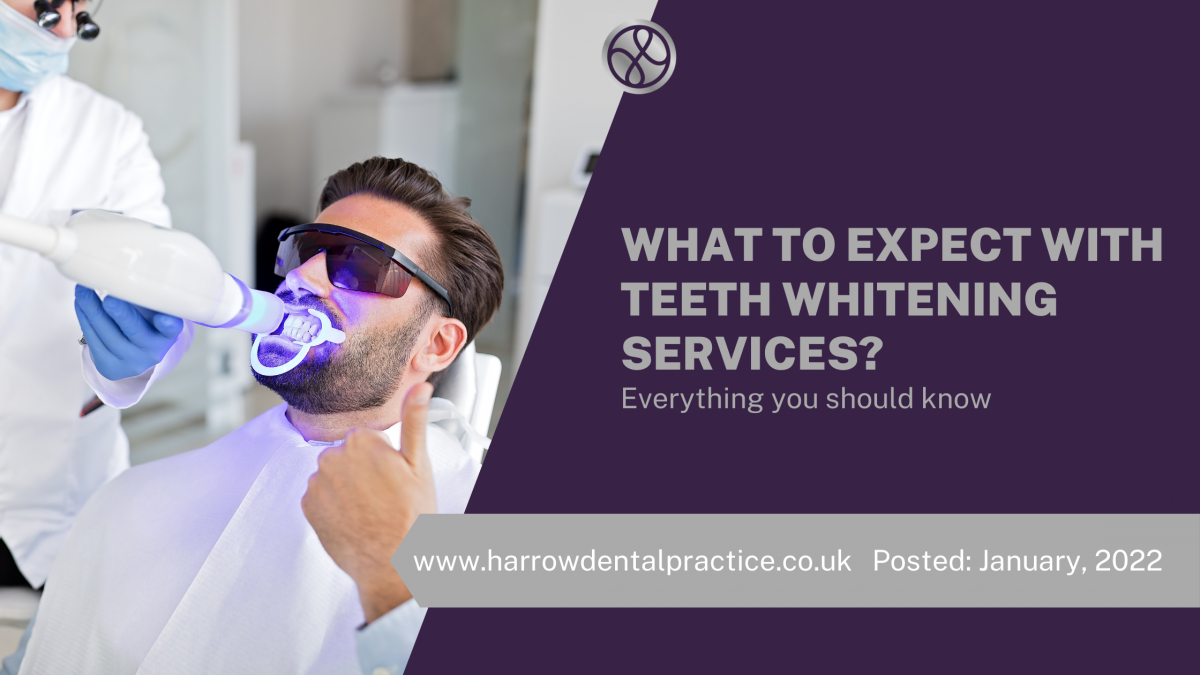
Technically, both procedures are characterised as teeth whitening. However, the so-called laser whitening involves using light to activate the bleaching agent in the whitening formula, usually carbamide peroxide. When activated, carbamide peroxide breaks into hydrogen peroxide which penetrates beneath the tooth surface and chemically removes the teeth stains. Light-activated or laser whitening generally offers superior aesthetic results in a shorter duration. 

Will Smoking After Teeth Whitening Stain Teeth?

Smoking or chewing tobacco is one of the common causes of tooth staining. That is why dentists advise against smoking or drinking alcohol after getting your teeth whitened, as it will only accelerate the staining process. 

Teeth whitening done by a skilled cosmetic dentist can do wonders to your smile and personality! So, if you’re looking for a high-class cosmetic dental practice in Hornchurch, look no more! Harrow Dental Practice Essex provides all cosmetic and general dental services at affordable rates under one roof. So, book an appointment today and take your first step towards a sparkling and bright smile.

How To Get That Straight Teeth Smile?

A beautiful smile is an immensely valuable social asset. Some people are born with naturally beautiful, dazzling smiles, while others are not that lucky. One of the most common reasons for having a flawed smile is poor tooth alignment. If you are also concerned about your misaligned or crooked teeth ruining your smile and personality, there is no need to worry. Thanks to orthodontic treatment, no matter how flawed your smile is, it can be fixed. Continue reading to find out how you can get that straight-teeth, Hollywood smile with orthodontic treatment. 

How To Get Straighter Teeth?

When it comes to getting your teeth straightened, there are several options available. Broadly speaking, there are two main options: cosmetic dentistry and orthodontic treatment. If you have minor orthodontic problems like spacing or overlapping teeth, your dentist may fix it with veneers or crowns. However, for more severe issues, your dentist will eliminate the underlying issue with traditional braces or Invisalign clear aligners for more severe issues. Depending on the severity of your problem, your dentist will advise a teeth straightening option that best suits your needs. 

Are Dental Braces’ Sole Purpose To Straighten Teeth?

Short answer, no. As discussed earlier, you can either get your misaligned teeth cosmetically fixed with veneers and crowns or fix them orthodontically with braces or removable aligners. If you cannot wait for the completion of your orthodontic treatment – which may take anywhere between 8-24 months – or if you cannot afford orthodontic treatment, you may opt for cosmetic teeth straightening. When it comes to orthodontic treatment options, the removable aligners are generally reserved for mild to moderate problems, while braces effectively treat more severe bite problems. 

What Are The Benefits Of Having Perfectly Straight Teeth?

Apart from the most obvious benefit of enjoying a beautiful and attractive smile, there are several other benefits of having straight teeth. According to the American Association of Orthodontists, straight teeth offer the following health benefits:

  • Easy teeth cleaning – lower risk of gum problems and teeth cavities 
  • Lower risk of temporomandibular joint problems, headaches and migraines – due to decreased pressure on the jaw joints
  • Lower risk of tooth wear and sensitivity 
  • Improvement in sleep pattern

A poor bite is a reason behind some of the most common dental problems. Even if you have a single misaligned tooth, it will prevent your other teeth from mating optimally, thereby causing various dental problems that may ultimately result in tooth fracture. Hence, getting your teeth straightened as soon as possible to avoid complications later in life is recommended. 

Should Crooked Teeth Be Straightened?

The biggest problem with crooked teeth is that they can ruin your smile, especially if they are the front teeth. Besides, if your teeth are not aligned properly, you will have difficulty cleaning them properly, putting you at a higher risk of developing gum problems due to plaque and tartar deposition. Furthermore, an improper bite can lead to a host of problems that may ultimately result in tooth loss. 

Why Is It Necessary To Straighten Your Teeth Alignment?

Getting your teeth straightened is important for your smile and your dental health, and general well-being. As discussed earlier, misaligned or crowded are difficult to clean properly. The resultant gum problems not only affect one’s oral health, but according to the World Health Organization (WHO), it can also affect overall general health. Research has shown that the bacteria inside the inflamed gums can travel to other body organs and may cause serious, even life-threatening medical complications like heart attack, stroke, and preterm births. 

Do Clear Aligners Really Work To Straighten Teeth?

Clear aligners are removable appliances, just like retainers that are worn over the teeth. These removable aligners are designed so that each aligner set will gradually move your teeth in the desired direction. Your dentist will ask you to wear each aligner set – one for upper and lower teeth each – for about 14 days. Afterwards, you should switch to the next set of aligners. In this way, the removable aligners will continue to move your teeth and align them optimally. 

What Are The Teeth Straightening Options For Adults?

Today, there is no restriction to using any orthodontic treatment options for elders. In fact, using a specific orthodontic treatment option is more of a preference than a treatment requirement. Both fixed braces or Invisalign aligners can be used for treating orthodontic problems in adults. You should consult with your dentist regarding an orthodontic treatment option that best suits your dental health needs. 

Is It Possible To Get Perfect Teeth Without Braces?

The ideal treatment for straightening misaligned teeth is orthodontic treatment. However, if you cannot wait for 12-18 months for your orthodontic treatment to complete or cannot afford orthodontic treatment, your dentist may fix your teeth alignment problems cosmetically. There are several cosmetic options available for straightening teeth:

Your dentist will guide you on whether you are a suitable candidate for getting straighter teeth with cosmetic dentistry. 

Did you know that your smile is the first thing people notice about you? So, if you want to make a great first impression on people you meet for the first time, you must have perfectly aligned and pearly white teeth that beautify your smile if you don’t have straight teeth, no need to worry. If you live in or around Hornchurch, Harrow Dental Centre can help you. We take pride in having a qualified and experienced dental team that strives to provide high-quality dental services to our patients in a comforting and relaxing environment. So, book a free orthodontic consultation today and let us give you a set of pearly white teeth and a beautiful smile.

Root Canal Treatments – Your Comprehensive Guide

For many people, the word “root canal treatment” is synonymous with pain and discomfort. But, this is actually not true. Every day, dentists perform thousands of root canal procedures globally and save millions of teeth from extraction each year. If your dentist has recommended a root canal procedure for one of your teeth, you might be wondering what this procedure actually is, whether it is safe, when it is needed. Continue reading to find everything you need to know about root canal treatment

What Is A Root Canal? 

 A root canal refers to space within the tooth roots that are filled with the dental pulp – the nervous tissue of the teeth which contains the nerves and blood vessels that nourish and innervates a tooth. Under healthy conditions, the sensitive dental pulp remains protected from the outside by outlying dentine and pulp layers, respectively. The problem begins when tooth decay, wear, or trauma destroys the outer tooth layers and exposes the underlying pulp. If this condition is not corrected timely, the pulp tissue may get irreversibly inflamed, leading to a painful condition. 

When this happens, the only option available to your dentist to save this tooth from extraction is to perform a root canal procedure. According to the American Association of Endodontists, a root canal procedure involves removing the inflamed pulp tissue followed by thorough cleansing of the root canals and then filling it with an inert material to prevent future infections.  

How Is A Root Canal Done On A Front Tooth? 

Whether it is the front or a back tooth, the steps involved in performing root canal treatment remain essentially the same. However, a fundamental difference between the front and back teeth is that the front teeth have only one root that is considerably longer. In the case of a front tooth, your dentist will first drill a hole in the tooth to expose the pulp chamber. Afterwards, they will use specialised endodontic equipment to remove the inflamed pulp tissue, followed by thoroughly washing the tooth’s interior with an antiseptic solution and then drying it. 

Dentists endodontic files to shape the tooth’s interior in a tapering fashion and then fill it with an inert material. They will then place a temporary filling on the tooth while the healing takes place inside the tooth. After a few weeks when the tooth’s interior has healed, your dentist will replace the temporary filling with a permanent one. 

Does A Root Canal Kill A Tooth? 

A root canal procedure involves removing the inflamed pulp tissue from the tooth’s interior. Since the dental pulp is responsible for innervating and nourishing the tooth. So, the tooth loses its nourishment and nerve supply following root canal treatment. This is also why teeth become brittle and weak after endodontic treatment. 

What Are The Steps Involved In A Root Canal Treatment? 

A root canal is an endodontic (endo=inside, odont=teeth) procedure that is completed in multiple steps. During your initial appointment, your dentist will perform a clinical examination of the affected tooth. They will also look at the x-ray images of the tooth to see the extent of the damage. Your dentist will drill a hole in the tooth to expose the underlying infected pulp, to relieve the pressure and pain. 

During the next appointment, your dentist will use specialised endodontic equipment to remove the infected pulp from the tooth’s interior. Afterwards, they will use antiseptic solutions or saline water to wash and clean the root canal. After the root canal has been dried, they will insert an inert rubbery material called gutta-percha to fill the tooth’s interior. This is done to prevent future chances of infection. After this, your dentist will place a temporary filling over the tooth until healing ensues. Once the tooth has healed, your dentist will replace the temporary filling with a permanent one. If required, they will also attach a crown over the restored tooth to reinforce it. 

Should I Have A Root Canal Or Extraction? 

A root canal is your dentist’s attempt to save a damaged tooth from extraction. Since no tooth-replacement option is better than your natural teeth, a root canal procedure should always be preferred over tooth extraction.  

How Long Does Root Canal Take? 

Dentists typically perform a root canal procedure in multiple sittings. The time required to complete the procedure depends on various factors,  such as the location of the tooth and the extent of infection. Generally, it requires two to three sittings for completion. However, in some cases, dentists choose to perform a root canal procedure in a single sitting. 

How Safe Is A Root Canal?

Like all other dental procedures, a root canal treatment procedure is absolutely safe, provided it is performed by a qualified and experienced dentist or endodontist. So, you can rest assured that a root canal procedure will have no effect on your oral health or physical wellbeing. 

What Is The Cause Of Biting Pain After Root Canal?

Biting pain following a root canal can occur due to two reasons. Firstly, a “high” filling which puts pressure on the tooth whenever the opposing teeth mate. Another reason for post-root canal biting pain may be accidental damage to the tooth’s tissues, called the periodontal ligament. This type of pain typically goes away as soon as the damaged tissue heals up. 

Whether you need a root canal treatment, dental fillings, or Invisalign aligners, Harrow Dental Service is at your service. So book a consultation appointment today and let us experienced and qualified dentists to take care of all your dental problems in a calm, relaxing and pain-free environment.

How Long Do Lip Fillers Last?

If you have wished your lips were plumber and smoother, you might have considered lip augmentation using fillers. According to the US Food and Drug Administration, fillers are medical treatments used to give a fuller and more prominent appearance to the lips and other facial structures like the cheeks, chin, and nasolabial folds. The primary purpose of dermal fillers is to fill wrinkles and add volume to deficient areas. 

This article is for you if you are considering lip fillers to improve your smile and facial appearance. Continue reading to find everything you need to know about dermal fillers and how they can give you a charming and attractive smile.

How Long Do Lip Fillers Last?

According to the National Health Service, the majority of lip fillers are not permanent. How long do lip fillers last depends on the type of filler being used in the skin clinic, their concentration, and the site at which they are injected. However, generally, they tend to last anywhere between six to eighteen months.

According to the American Academy of Dermatology Association, the hyaluronic acid-based fillers – like Vorbella and Restylane – typically last between four to twelve months, 

Does Lip Filler Dissolve Naturally? 

Whether lip fillers are made from natural or synthetic sources, they tend to dissolve naturally. However, their rate of degradation can be controlled to enhance their lifetime. That is why you may need to repeat the procedure after some time to continue enjoying a youthful and attractive appearance.

However, according to the US Food and Drug Administration say that certain dermal fillers are non-resorbable. These types of dermal fillers are not used in the lips. Instead, they are typically reserved for the cheek, acne scars and the nasolabial folds. 

How To Make Lip Fillers Last Longer? 

While virtually all lip fillers have a limited service life, there are ways in which you can make them last longer. Some of these include:

    • Follow the Guidelines Following the manufacturer’s and your doctor’s recommendations regarding aftercare.
    • Stick to the Shade – The more time you spend in the sun, the more quickly your lip fillers will dissolve. Therefore, you should try to remain in the shade as much as possible. 
    • Keep Track of Your Exercise Routine – No doubt exercise is good for your health. But research has shown that the increase in metabolic activity caused by physical activity and exercise can also make your lip fillers dissolve at a faster rate. 
    • Healthy Diet – make sure to eat a diet rich in fruits and vegetables, which will help keep your lips healthy and plumper. 
    • Avoid Stresstoo much stress not only affects your physical and mental health, but it can also cause your lip fillers to dissolve at a faster rate. 

What Are The Benefits Of Dermal Filler Treatments? 

Still not sure whether dermal lip fillers are suitable for you? Here are some benefits of the dermal fillers that will help you in deciding in their favour:

  • Dermal lip fillers help improve your smile, giving a boost to your self-confidence.
  • No need to wait; you will immediate results with dermal fillers
  • There is recovery or downtime associated with dermal fillers
  • Dermal fillers do not carry any health hazard

Long-term Side-effects Of Lip Fillers?

According to the American Academy of Dermatology Association (AAD), some of the commonly associated, mild side effects of lip fillers include:

  • Swelling 
  • Redness over the affected area
  • Tenderness
  • Occasional bruising

The AAD also notes that if a filler injection is administered in a non-medical setting, it may lead to more serious adverse effects, such as:

  • Lumps or ridge formation
  • Over-filling 
  • Allergic reaction – may prove life-threatening in rare cases
  • Discolouration of the skin 
  • Severe swelling 
  • Generalised infection

Do Lip Fillers Hurt With Numbing Cream? 

The extent of numbing required for the administration of lip fillers depends on the site of injection. Typically, there is no need to administer anaesthesia in the hands, while a nerve block may be necessary for dermal lip fillers.

If you are concerned about the pain associated with dermal filler administration, your facial surgeon may apply a numbing cream to reduce the pain. As a result, you will only feel a slight pinch of the filler injection.

Sometimes, dermatologists also use ice cubes to numb the site of filler injection. 

How Much Swelling Is Normal After Lip Fillers?

The non-invasive, injectable facial fillers are used for adding volume to the face, chin, lips and cheeks. While dermal fillers are safe for human use, their injection may cause some swelling and inflammation. If that happens to you after injection, don’t worry or stress over it.

The swelling occurs because the fillers bind with the water present inside the skin, making it appear plump and puffy. The swelling should go away in one or two weeks. In some cases, swelling may occur a few days after the filler injection. However, if the swelling persists for three to four weeks, it is a good idea to call your dentist and let them know of your situation. 

If you wish to get rid of your facial wrinkles to enjoy a youthful, attractive and healthy appearance, dermal fillers are an excellent option. At Harrow Dental Practice, we offer all dental aesthetic and restorative services to our esteemed patients under one roof. Our experienced, board-certified facial aesthetics experts, Dr Bhandal and Dr Creta have a combined experience of more than twenty years in transforming flawed smiles into lively and youthful ones. So, what are you waiting for?

Book a consultation appointment with us today and begin your journey towards the smile of your dreams. 

How Does Invisalign Work?

how does Invisalign workIf you are thinking about getting your teeth straightened with orthodontic treatment, you might find yourself stuck between different available teeth straightening options. Like many people, you might also be wondering whether the Invisalign removable aligners actually work – and whether they are a suitable option for you. But don’t worry, if you are also seeking answers to the above questions, this article is for you; it explains everything you need to know about orthodontic treatment options so that you can make an informed decision. 
Is Invisalign Really Better Than Braces?

Whether it is the conventional metal braces or the contemporary Invisalign aligners, every orthodontic treatment system has its own merits and demerits. The Invisalign aligners offer several benefits over the traditional metal braces. The most important positive feature of the Invisalign aligners is that they are made from a transparent material. Therefore, the Invisalign aligners are virtually invisible when you wear them. Also, since the aligners can be removed, they allow you to eat all your favourite foods and brush your teeth and floss without difficulty. 

When it comes to their efficacy, the Invisalign aligners are an excellent option for fixing a wide range of mild to moderate orthodontic problems. However, for more complex or complicated orthodontic issues, your orthodontist may recommend getting braces. 

What Disadvantages Are There To Invisalign?

Invisalign aligners are an excellent option for individuals who wish to get their teeth straightened without wearing the unesthetic metal braces. Despite their numerous benefits, Invisalign aligners – like other orthodontic treatment options – have a few disadvantages. The first drawback is that the success of treatment with Invisalign is highly dependent on patient compliance. The aligners will only work if you wear them for at least 22 hours each day. Therefore, Invisalign aligners may not provide the desired results in individuals who do not follow their dentist’s instructions regarding their care and use. 

Another drawback of the Invisalign aligners is that these aligners are more expensive than conventional braces. Furthermore, the removable aligners may require a longer treatment time to fix complicated or complex problems than the fixed braces. Before starting your treatment, your dentist will perform a thorough clinical exam and evaluate a digital scan of your teeth to prepare a custom treatment plan – and to ascertain  which orthodontic treatment option best suits your orthodontic treatment needs. 

Can Invisalign Damage Your Teeth?

Your dentist or orthodontist will design multiple sets of numbered aligners for you. You will be asked to wear each aligner set for 14 days – wearing them at least for 22 hours each day. American Association of Orthodontists, your aligners will be designed in such a way that they will gradually move your teeth in the desired direction – by applying calculated and gentle forces. Therefore, they will not harm your teeth or gums in any way. Each set of aligners will continue to realign your teeth – bringing you one step closer to a naturally beautiful and healthy smile. 

How Good Are Invisalign Braces?

The success of Invisalign treatment depends on various factors. The most important among them is the skill of the orthodontist. While you may find many general dentists offering orthodontic treatment – and even they are legally allowed to do so – they do not have the same experience and skills as a specialist orthodontist. According to the National Health Service (NHS), orthodontists have to undergo three or four years of specialised training after dental schools before they are considered specialists in their field. Therefore, it is always good to go to an orthodontist if you need braces or Invisalign treatment. 

What Can Invisalign Not Fix?

Invisalign aligners can be used to treat a wide range of orthodontic problems such as tooth spacing, crowding misalignment, and mild rotation. For moderate to severe orthodontic issues, your orthodontist may rely upon special Invisalign attachments – that are attached to your teeth – and serve as anchors, allowing your aligners to perform complex tooth movements like rotations and transverse movements. 

Despite that, there are few cases involving bite problems that may not be suitably treated with Invisalign aligners. For these cases, your dentist may recommend conventional metal braces for optimal treatment. 

Why Do So Many People Use Braces And Not Invisalign?

There are many factors why many people continue to choose metal braces for their treatment. First, the Invisalign aligner treatment is expensive, and not all people can afford it. Furthermore, the Invisalign treatment is not covered by the NHS, while orthodontic treatment with braces is only available for youngster below 18 years of age. 

Second, not all dentists are skilled or experienced enough to perform orthodontic treatment with clear aligners. Therefore, they would instead treat their patients with whatever treatment option they are more comfortable and skilled at – the conventional metal braces. 

Finally, a small number of patients have to wear braces – despite their desire to get treated with Invisalign aligners – because they are not suitable candidates or because their problem cannot be fixed with removable aligners. 

To sum up, both metal braces and clear aligners are effective in fixing misaligned or crooked teeth. However, they work in different ways. If you wish to straighten teeth, you must go to a fully trained and qualified dentist  who has extensive clear aligner therapy experience. If you are looking for an orthodontic practice in Hornchurch for Invisalign aligners, look no more. 

At the Harrow Dental Practice, we have a team of qualified and experienced dentists who have years of experience in turning flawed and blemished smiles into picture-perfect, naturally beautiful smiles with Invisalign aligners. 

So, what are you waiting for? Book a free video consultation appointment with us today, and let us give you a set of perfectly aligned pearly whites and a brand new smile.

Are Teeth Implants Permanent?

Gone are the days when dentists only used removable dentures for replacing missing teeth. Today, much more durable and aesthetically pleasant options are available, such as dental implants.

An implant is a screw-shaped titanium post which serves as an artificial tooth root. Once it becomes fully anchored within the jawbone, the dentist then attaches a suitable prosthesis over it – depending on the number of missing teeth – to complete the artificial tooth. 

While dental implants have been popular worldwide as the most preferred tooth replacement option, many people are still unaware of how implants work or whether they are long-term tooth replacement option. If you are thinking of getting your missing teeth replaced with dental implants, this article will provide all the information you need to make an informed decision. 

Truth About Dental Implants

Dental implants are shaped just like a tooth root – and function like them too. Similarly, like the natural teeth, the implants are anchored within the bone. As a result, dental implants offer a solid foundation for the artificial teeth – the crowns, bridges or dentures attached to them. Since the dental implants remain fixed within the jawbone, they also restore one’s ability to eat and speak without difficulty. You can eat all your favourite foods – even the hard ones – without any problem. 

However, dental implants are indeed more expensive than other tooth replacement options. However, considering their numerous advantages, such as their safety, long life and aesthetics, their high cost is a minor drawback. 

How Long Do Dental Implants Last?

Dental implants are one of the most durable tooth replacement options currently available. The implants are made from high-quality titanium alloys, which makes them extremely resilient and durable. Research has shown that dental over 90% of dental implants last beyond 10 years. According to the American Academy of Implant Dentistry, well care and looked after dental implants can even last for a lifetime. Similarly, the American Association of Oral and Maxillofacial Surgeons states an implant success rate of 95%

Can You Have Dental Implants With Receding Gums?

Like natural teeth, the presence of healthy gum tissues around an implant will significantly increase the chances of its success. However, this does not mean that gum recession individuals cannot get their teeth replaced with dental implants. 

During your initial appointment, your dentist will determine the underlying cause of gum recession. In the early stages, gum recession can be treated with professional cleaning. Your dentist may also perform a crown lengthening procedure. In this procedure, your dentist will detach the gums and replace them at a higher position where they cover the implant surface. In advanced cases where there is widespread gum recession, your dentist may need to perform gum grafting. According to the American Academy of Periodontology, gum graft surgery is a procedure in which your dentist will take soft tissue grafts from another body site to compensate for the lost gum tissue. 

What’s The Link Between Periodontal Disease An Implant Failure?

Dental implants look, function and feel just like natural teeth. While this is an upside, the downside of dental implants is that they can also get diseased like a real tooth. If regular oral hygiene maintenance is not ensured around an implant, or if there is insufficient gum tissue to cover the implant-restoration junction, plaque and tartar deposits begin to form around the implant. Over time, these bacteria release toxins and cause inflammation of the soft tissue around the implant. This condition is known as peri-implantitis, and it is one of the most common causes of implant failure. 

Will Getting Dentures Stop Gum Disease?

Gum disease is caused by two main factors; poor general oral health and harmful bacteria. Hence, gum disease management involves removing the plaque and tartar deposits from the teeth through professional cleaning – or other advanced periodontal procedures – if necessary. Unfortunately, getting dentures will not help with the cessation of gum disease. Instead, it may worsen the situation if oral hygiene maintenance is not ensured optimally. 

Will Tooth Extraction Cure Periodontal Disease?

Tooth loss is the leading cause of long term gum disease. According to the World Health Organization (WHO), about 10% of the world population have lost a tooth because of gum inflammation. As discussed earlier, the only treatment of periodontal disease is strict oral hygiene maintenance and removal of plaque and calculus deposits on the teeth with professional cleaning. Getting your teeth extracted will not help in treating gum disease. 

How Long Do Dental Implants Take To Heal?

Once your dentist places an implant inside the bone, he or she will place a healing collar over it. This is done to ensure the implant site’s uninterrupted healing- which generally takes anywhere between four to six months. Once the implant site has healed properly, and bone tissue has formed around the implant, only then will your dentist attach a prosthesis over it. 

How Long Does A Dental Implant Procedure Take?

The time needed for the placement of dental implants depends on various factors, such as the site and the number of implants to be placed. On average, the surgical procedure for the placement on an implant can take anywhere between one to two hours. The duration may be prolonged if your dentist needs to perform an additional procedure like bone graft. Don’t worry; this procedure won’t be painful as your dentist will perform it under the effect of local or general anaesthesia. 

Looking for top-quality, long-lasting dental implants in Hornchurch? Our implant dentist, Dr Saleha Aria and Prosthodontist, Dr Safa Somi at Harrow Dental Practice, can help. Whether you seek dental implants for tooth replacement or braces for missing teeth, Harrow Dental Practice offers all dental care services under one roof.

A beautiful smile with dental implants awaits you at Harrow Dental. Not sure about implants? Book a free consultation appointment today and get honest advice from our dentists. 

No Drill Dentistry With A Dental Laser

laser no drill dentistryFor many people, visiting the dentist’s office is nothing short of a nightmare. They would rather bear extreme toothache and discomfort, than dare step foot into a dental clinic.

According to the Oral Health Foundation, one in every third person in the UK has some form of dental fear, while one-eighth of the population suffers from extreme dental phobia. Similarly, it has been estimated that around 31% of UK citizens have untreated teeth cavities because they are afraid of going to their dentist, while another 29% suffer from dental pain for the same reason. 

Research has indicated that the fear of the needle and strange, frightening sound of the dentist drill are among common reasons why people avoid visiting their dentists – even at the cost of their oral health.

If you are also one of those individuals who dread the dental drill and tries to find any excuse to forgo a scheduled dental appointment, then there is good news for you.

Thanks to dental lasers, you don’t have to bear the dreadful sound of a dental drill anymore. You can simply relax on the dental chair, while your dentist performs treatment with a dental laser soundlessly – without the need for a drilling procedure. 

Not only have dental lasers started to replace the dental drills in dental offices, but they are also used by dentists to perform newer innovative treatment procedures. This article explains how you can benefit from lasers as a dental patient – especially if you do not like the sound of the dentist drill.  

Is Laser Whitening Better Than Dentist Home Kit?

Dental lasers have completely revolutionised how dentists perform teeth whitening. Not only laser-assisted whitening procedures require lesser time, but they also provide superior whitening results compared with other professional and at-home whitening procedures – that too in just one sitting. 

But how do lasers make teeth whitening more effective? Let us explain. Most whitening formulae containing a bleaching agent that penetrates into the tooth enamel and removes the stains. When dentists use lasers during professional whitening, they activate these whitening formulae which allow them to reach deeper into the tooth and remove more stains – thereby achieving a better aesthetic outcome. 

How Does A Laser At The Dentist Work?

Dentists use different types of lasers for performing various procedures.

  • One of the most common types of lasers is the one used for whitening teeth.
  • Other types of lasers are called the “hard-tissue lasers”, which are used as a replacement for the conventional dentists drilling procedure – to prepare teeth cavities for restoring damaged teeth.
  • Another type of lasers, the “soft tissue” lasers are used by dentists for performing procedures on soft tissues like the gums and lips. 

What Does The Dentist Use A Laser For?

Dental lasers have found a wide range of employability in the dental office. Apart from using them for whitening teeth, dentists may also use them for:


  • Hard Tissue Procedures  – these lasers are used for performing procedures on the dental hard tissues, like the teeth and the bones. Some examples of dental hard tissue procedures include cavity preparations, selective removal of jaw bone to remove an impacted tooth, and surgical tooth extraction. 
  • Soft Tissue Lasers – soft tissue lasers are used for procedures such which involve removal, or recontouring of oral soft tissues like the lips and the gums. For example, your dentist may use a laser for removing excessive tissue – a condition called gingival hyperplasia.


How Can A Laser Replace A Dentist Drill?

The word LASER is an acronym for “Light Amplification through Stimulated Emission of Radiation”. Simply put, lasers work by emitting high-power light energy which can be used for various purposes.

The amount of energy is so high that it can be used for cutting hard tissues like teeth and bones or to vaporise soft tissues like gums without causing significant bleeding.

Similarly, in the case of teeth whitening, a dental laser serves as a source of heat, leading to the activation of the bleaching agent. 

Why Is A Laser Good For People Scared Of The Dentist?

Dental lasers offer several benefits. These include:


  • Replacement for the Dental Drill – dental lasers are an excellent alternative to the dental drills. They are especially effective for individuals who are afraid of the sound of the drill and avoid dental treatment because of this. The dental drill works soundlessly, and therefore, can prove helpful while treating extremely frightened and apprehensive patients. 
  • Improved Healingdental lasers offer superior precision and surgical accuracy than conventional surgical instruments. As a result, surgical procedures performed on dental lasers cause lesser scaling, and they also heal more quickly. 
  • No Bleedingdental lasers also serve as cauterising agents during surgery – occluding blood vessels and stopping the bleeding. This gives a clearer view of the dentist so that they perform the surgery with more ease. 
  • Reduced Need for Anaesthesiadental lasers also reduces the pain experienced during treatment. Therefore, they require a lesser quantity of anaesthesia in comparison to conventional surgical procedures. 
  • Tooth Conservationowing to the high-precision of the lasers, dentists only remove the damaged tooth structure, while preserving the healthy tooth. As a result, the restored teeth are much stronger and serve for a longer duration.


In addition to the dentist drill, COVID infection has also made people afraid of visiting the dentist. However, there is no need to worry, as dentists are trained in ensuring the highest standards of sterilisation and cross-infection control. 

If you are in Sussex, and you’re looking for a dentist office which provides painless “drill-free” treatment in a comfortable and relaxing environment, then Harrow Dental Practice, Hornchurch is where you should go.

Our aim is to provide high-quality dental services and to allay the fears of our esteemed patients, especially the ones who are afraid of the dental drill.

Our friendly and gentle staff in Essex will ensure that you received the highest standard of dental care. Visit this link on our website, scroll down and fill the form to book an appointment with our treatment coordinators – to discuss your drill-free treatment options. 

Mouth Guards Everything You Need to Know

Mouth Guards Everything You Need to KnowWe are living in one of the most stressed-out times in the history of mankind. In fact, in a recent Gallup Global Emotions Report, the UK was 46th in the list of most positive countries. That’s not all. At least a third of the people interviewed suffered from stress.

The problem isn’t only that people are more stressed, but that stress harms our health. Stress can cause sleep problems, digestion problems, chest pains, headaches, grinding teeth, and more.

That’s where mouth guards come in handy. Maybe you are in a phase of your life where the stress you are feeling is unavoidable. It may pass soon, or it may not. But you can do something to ensure your teeth aren’t harmed by it.

When you are stressed out, you tend to clench your teeth and or grind your teeth at night. This may cause your teeth to wear down over time, resulting in issues with your increased sensitivity and tooth loss.

It’s not like a mouthguard for sleeping is hard to use or buy. Read on to see what mouth guards are and how you can use them to protect your teeth.

Over-the-Counter Mouth Guards vs. Custom-Made Mouthguard for Sport

Mouth guards aren’t only used for teeth grinders but also for athletes who wish to protect their teeth while playing contact high-impact sports, like football, lacrosse, or cricket.

There are two different ways you can get a mouth guard that works for you. You could buy an over-the-counter mouth guard that isn’t custom-built for you but is a generic size-fits-all kind.

Some of them can be used right out of the packet, which is fine if you have a standard-sized mouth (but who really does).

There are others that are boil-and-bite, in which you boil the mouth guard and then bite down on it to customize it to your mouth. With the over-the-counter mouth guards, you are not assured of a complete fit in your mouth.

It could result in issues if you have to wear them for long periods of time, where your mouth guard starts bumping against your lips, tongue, or palate, causing discomfort.

The other option is to go to a professional dentist and get a custom mouth guard built for your mouth.

It will be much more comfortable to use, and bonus, if your teeth move around and things get uncomfortable, you can go back to your dentist to get your mouth guard adjusted.

Perfect Fit Mouth Guards

If you are buying a mouth guard for a child whose mouth is still growing and constantly changing, then a custom mouth guard is the way to go.

This way, the mouth guard can be adjusted every few weeks to accommodate your growing child’s mouth.

There are four ways to tell if your mouth guard is a perfect fit for you or not:

1. It shouldn’t make you gag, and if it does, then it isn’t a perfect fit

2. Your mouth guard should fit in your mouth without you clenching your teeth or mouth against it

3. It should fit over part of your gums so that it is protecting that area as well

4. Your mouth guard shouldn’t interfere with your speech or breathing

If the four points above don’t apply to your mouth guard, then you are good to go.

How Do Mouth Guards Work for Sleeping

There is a condition called Bruxism, which includes both teeth clenching and teeth grinding, which could be stress-related. Bruxism can wear down your teeth over time, so a night mouth guard is used to prevent that from happening.

Usually, these mouth guards for teeth grinding are worn while you are asleep so that when you do clench or grind your teeth, you don’t wear down your teeth over time.

The grinding mouth guard forms a sort of soft plastic barrier between your top and bottom teeth so that you can’t grind them against each other, and thus protect them from wear and tear.

If you have sleep apnea or you are a snorer, there are mouth guards available for you as well. Also, people with braces can wear mouth guards, but those would have to be custom-built by your dentist or orthodontist.

Do Mouth Guard Go on Top or Bottom

If you are using a mouth guard for protecting in high-impact sports, then it would cover your upper teeth only. But you can get a custom mouth guard that would cover your bottom teeth as well.

For teeth grinders, a night mouth guard goes on your bottom teeth because that gives the best results. But if you cannot wear a night guard on your bottom teeth for some reason, then a dentist can make a custom night guard for your upper teeth.

Dental Night Guard Side-Effects

The side effects of a dental night guard are minimal and are usually worth the benefits of a night guard.

In general, if your custom night guard is causing your discomfort, irritation, or pain, go to your dentist, and they will be able to adjust it for you.

Some other side effects that could happen are shifting teeth, jaw misalignment or pain, poor fit, causing soreness, pain, or pressure.

These might be your mouth getting used to a strange item, or it could be a bigger problem that needs to be fixed. It’s always a good idea to go back to your dentist and ask for a readjustment.

If you are uncomfortable with your night guard, you won’t use it, and that negates the whole point of it.

Good Oral Health Could Mean Using a Mouth Guard to Protect Your Teeth

Sometimes life comes at you fast, and there’s no way to go around it. When the stormy seas abound, and your body is taking the brunt of it, using mouth guards is a great idea to protect your teeth from further damage.

Having strong pearly whites in your old age is everyone’s ideal.

If you would like to get a custom mouth guard, book a free Zoom consultation with our dental practice today!

How to Get Over Fear of a Dentist Drill

Trauma translates, and if you are a person who experiences anxiety or struggles with phobias, it’s possible that you’ve had a traumatic experience at the dentist or otherwise.

We talk about our child-brain in the mental health field as it directly relates to the way we react to external stimuli as adults.

As kids, the dentist was a terrifying place to go. And for so many of us, even decades later, it is an anxiety-inducing experience.

This fear can deter folks from the necessary dental work. Overcoming dentist drill phobia is the only route that can produce long term, healthy results.

How Does Dentistry Work?

Dentistry is the practice of diagnosing and treating issues related to teeth, gums, and other mouthparts.

Dentists are also educators who teach their patients how to make choices that positively affect their oral health. Dentistry is everything from removing decay from teeth and filling cavities to prescribing medications.

Dentists have a range of tools and equipment they use to care for our teeth. They can range from X-ray machines to mouth mirrors, to probes and forceps.

Modern technology is a gift that keeps on giving. If you find yourself in a position where drilling is not an option for you, you have options.

Depending on the treatment needed, drill-less technology is a less invasive option. Waterlase laser dentistry gets the job done by using a mix of light lasers and water sprays to address a boundless array of treatments.

The relief that Waterlase has provided to patients of all needs has been incredible. Now, more than ever, folks who were tough to get in the door over the years are showing up.

Cutting down treatment times, gentle application, and reduced post-op issues are just some of the benefits of drill-less technology. That alone is worth everyone’s time.

The Waterlase approach can also treat crown lengthening, gingivectomy/gingivoplasty, osteoplasty/osteomy, removal of hard tissue, and laser removal of damaged soft tissue.

The versatility of this tool can make dental treatment much more approachable to folks with dental phobias. Recognizing the industry cares enough to put in place something reachable speaks volumes.

Why Do Dentists Drill Before Filling?

Part of the stress of dentist anxiety comes from the sounds we hear in the chair. The sound of the drill is often the most anxiety-inducing part for people. Sound can affect our neurology, and it can transport us in time.

Dentists have to drill before they fill a cavity to loosen. This removes decaying enamel. This can ease an exposed nerve or bacteria settling into the deeper area of your root. Leaving this bacteria can lead to extreme health complications down the road.

Many people report that the sound of teeth drilling is disarming. The word, “drill”, is just as dysregulating. If someone has experienced dental trauma, they will likely have unpredictable symptoms while undergoing treatment. These symptoms can look different for everyone.

Phobias can take a severe toll on people’s lives. When we understand the weight of phobia, we can be better equipped to treat it from a place of compassion and understanding. Dentists and their support team are familiar with dental phobia.

Your dentist having transparent conversations with you before your visit is crucial. Identifying needs and stressors can make your visit more manageable. Even if some folks have mild anxiety, this could be the difference between not going back to the dentist or having those healthy, routine check-ups.

Some practices will go above and beyond to comfort their patients. They’ll get their patients familiarized with what tools will be used and what they’ll do. Showing them the process, offering a mirror so they can see, and especially answering questions they may have along the way will ease anxiety.

How To Overcome The Sound And Fear Of The Dentist Drill

If you’ve ever had a poor experience at the dentist, it may have been due to improper numbing. Once you are numbed, you should feel zero pain. However, dentists, just like doctors and other professionals, aren’t infallible. A human error is just that; human.

While the effort of your dentist to provide a sense of safety and confidence in you is deeply appreciated, it may not be enough to help you through a panic or anxiety attack.

A series of these experiences can no doubt set us up for failure. Processing the fear and stress associated with that experience can be a difficult task, and asking for help may feel as tall as Mount Everest.

One of the best ways to overcome the sound of the dentist drill is to wear headphones to your visit. Maybe even make a relaxing playlist for the occasion, be intentional with the genre. This way, you can drown the music out during the drill usage.

The Community Resiliency Model (CRM) is another great coping mechanism developed by the trauma institute. It is a compilation of regulation tools and coping skills; It will fill your toolbox with what it needs to weather a biological storm.

When we are experiencing stress and anxiety, our brain sends signals to different parts of our body. It begins with our cortisol level rising. You may notice when you are anxious, that you experience heart palpitations, clammy hands, or excessive sweating.

Whether through tracking, grounding, or identifying your resources- the CRM model and an awesome playlist can help you overcome the sound of the dentist drill.

Dentist Drilling During COVID-19

Living in the middle of a pandemic and needing in-person medical care can add to the stress of your dental appointment.

During Covid-19, you want to make sure the practice you’re connecting with has taken your safety seriously. A practice goes above and beyond the call of duty with full transparency about what to expect during your visit.

If you are needing dental work done amidst the pandemic, you may want to consider getting tested before your visit.

There are expectations in a place like waiting in your car, wearing a mask, and using your elbows instead of your hands. You can cut possible transmission questions about where you may have gotten sick.

Air purifying systems and heavy vacuum suction to remove aerosols and droplets is a must. You can feel safe knowing you’re connected to a practice that has everyone’s best interest at heart.

Word of Mouth

Every now and again you’ll see a one-star review amidst a sea of positive feedback. Generally, we can attribute this to a singularity. Something this person experienced had to do with miscommunication or something therein.

One of the ways we determine which products and services to use in this information age is through word of mouth. Reviews have become the highlight of how to make tough decisions. And when your dime, or life, is on the line- it is imperative that you consider what people are saying about this service.

The most honest way to process reviews is to take everything with a grain of salt and hang somewhere in the middle. If you notice plenty of folks giving 5-star reviews to a particular agency or service, with only one or two negative reviews, you’re probably in good shape to connect with them.

If you find the reviews are about 50/50, you may want to tread cautiously. You can’t put yourself in the hands of negligent providers when your health and wellness is on the line.

The Different Colors of Support

Traumatic stress responses happen at different stages of your life cycle. When it happens may determine if you carry an experience with you, and how greatly it affects your biology.

Even if you didn’t have a traumatic experience with a dentist visit growing up, that doesn’t mean your trauma responses aren’t showing up. Our brains can register fear and anxiety in the same way. So, if you had a traumatic car accident, it’s possible the same symptoms may show up when you have a close call on the road years later.

If you did have a traumatic experience around dental work, you can consider all sorts of different options to work toward neutrality. Putting in the work now can set you up for long-term success in self-regulation.

The ability to utilize those tools can prevent stressful situations from escalating. Moreover, your quality of life can improve as you navigate managing cortisol spikes.

Talk therapy is an incredible option for many people that provides the opportunity to unpack past experiences. Cognitive-behavioral therapy is a great option. It focuses on re-framing intrusive thoughts, behaviors, and biological responses to psychological distress.

Another route could be to work with a trained professional on EMDR (eye movement desensitization and reprocessing). This approach is widely successful, too, and helps people create new, healthy neural pathways in their brains.

You Can Do This

Having an awareness of the different ways to approach the future of your relationship with your dental practice is key.

Awareness leads to action. The action you collaborate on with your dental team will help all parties involved. You may feel stressed about communicating this with your provider. That may be a sign to disengage and form a new relationship with a practice that can meet your needs with ease and care.

It is tough to advocate for your needs. In doing so, you forge a path to great habits that will serve you and everyone you interact with for the rest of your life. Dentist drill or not, you can do this.

If you feel unheard, misunderstood, or worried about the working relationship you have with your practice, get in touch with us.