




Dental Implants Essex: How Long Do Dental Implants Last?

Did you know that dentistry is one of the oldest careers, going back to 7,000 BC in the Indus Valley Civilization? Are you needing to head to the dentist for dental implants but want to understand more about the process?

In this article, we here at Harrow Dental Practice will walk you through all about dental implants, the different kinds available, and how long they last. Read on to discover why many are making the choice to say hello to implants to have their beautiful smile back!

What Are Dental Implants?

Dental implants are a replacement for teeth that are missing. They’re a good foundation for either removable or fixed teeth. High-quality dentists will always try to make your dental implants resemble your other teeth as much as possible.

Dental Implant Benefits

There are various benefits including easier eating, an improvement in appearance, comfort, and self-esteem. Dental implants are an improvement to your oral health as well since they don’t require supporting teeth as bridges do. Your other teeth won’t need to be altered to support your implant as bridges do.

Convenience

Another reason patients love their implants is the convenience of them. You don’t have to worry about removing dentures or messy adhesives.

Bite Force

Since a tooth implant goes into where your tooth was before, this allows you to maintain the same bite that you had previously. Other replacement options won’t be as effective in restoring your tooth’s bite. This is due to them not being placed into your jaw.

Prevents Bad Changes

Having your teeth helps keep the facial structure of your face. When teeth are lost, it causes your face to lose the support it needs.

This can cause you to appear older than you are. Implants are similar to your natural teeth as far as support, and can help prevent it from changing its shape.

Natural Speech

Dentures can negatively impact your speech. Implants will allow you to have a more normal speech pattern.

Dental Implants for Seniors

You might be wondering if dental implants are the right choice for seniors, the answer is yes! Whether you’re 95 or 25, you deserve a smile that you love and will offer you more convenience with eating and comfort.

Instead of dentures which can cause more tooth and bone loss, choose implants. Dentures become loose over time which can make eating uncomfortable since your gums are sore from wearing the dentures.

There’s no such thing as too old for implants. Why suffer from trouble speaking and eating? You deserve to spend time with family and friends, and not feel uncomfortable.

Full Mouth Dental Implants

If you have most or all of your teeth missing, full mouth dental implants might be a great option for you. First, your implants will be placed in your jawbones, and they’ll act as a root replacement.

Why Full Mouth Dental Implants Might Be Right for Me?

Your dentist might recommend full mouth dental implants if they believe you’ll take good care of your oral hygiene after a procedure. Proper cleaning and flossing are vital after implants, you treat them like your other teeth.

You might be experiencing edentulism which means all of your natural teeth are missing. This is a way to ensure that you have a natural and beautiful smile.

Do you have bad or missing teeth? If your teeth are extremely damaged, your dentist might recommend full mouth dental implants as well.

How Long Does a Dental Implant Procedure Take?

Dental implants can be done in 4 appointments. For the first appointment, you come to Harrow Dental Practice in Hornchurch, Essex, for a consultation. You’ll meet the prosthodontist and cosmetic dentistry team.

The next visit to Essex you’ll receive the abutment and dental implant in place. Extractions can be done the same day as well. You’ll receive a temporary crown to allow your mouth to heal before receiving your replacement tooth.

The healing process can take between 8-10 weeks. This is important to ensure that your jaw bone is strong enough to hold your implant.

Visit 3 you’ll have impressions taken in our Essex office. This is so that you can have your dental crown fitting in your mouth properly. The dental crowns will match your other teeth.

Visit 4 will be your final fitting. You’ll have your brand new tooth/teeth in place.

After this appointment, you’ll want to visit your dentist for regular appointments to make sure you take care of your teeth properly. Dental hygienists are important as well.

Dental Implant Problems

As with any procedure, there’s a risk of dental implant problems. To minimize this risk, ensure that you go with a high-quality dental office that you can trust with plenty of experience, and who will use the proper equipment necessary. You’ll also need to take proper care of your dental implants as your other teeth to avoid other problems from surfacing.

1. Loose Implant

When the bone doesn’t fuse and grow with the implant, a loose tooth can occur. It’s known as osseointegration failure. Osseointegration is the process where the dental implant fuses with the bone.

If the process doesn’t happen properly, it can cause problems. The implant can fall out, become loose, or become uncomfortable.

Bone loss after an implant is another reason for a loose implant. Some bone loss is normal over the years, but it shouldn’t be enough to affect your implant.

2. Infection

In order to reduce your risk of an infection, take proper care of your gums. If you’re not sure about the proper way to brush or floss, speak with your dentist and dental hygienist who can help guide you.

If you have a bacterial infection in your gum you might need antibiotics to treat it. If it’s in the bone that may require removal of the infected bone tissue.

3. Nerve Damage

Choosing a high-quality dentist is vital, especially with avoiding nerve or tissue damage. Damage can lead to a decline in your quality of life. If you notice any nerve or tissue damage, get help straight away.

4. Peri-Implantitis

Peri-implantitis can take 5 years to cause symptoms. You might notice swelling or bleeding around the implant’s site. It’s due to chronic inflammation at your implant.

5. Sinus Issues

Sinusitis is a problem that causes swelling of the sinuses. Some symptoms are a blocked nose, bad breath, a toothache, sinus headaches, etc. This is a less common issue that’s found.

Avoiding Dental Implant Failure

First, take great care of your teeth and eat healthily. Fizzy drinks, junk food, and sugar can lead to tooth decay. Ensure that you have plenty of fruit and vegetables in your diet.

If you have a medical condition, speak with your doctor before starting dental implant treatment. Avoid smoking since that can cause infections, inflammation, and failure.

Make sure that you floss and brush everyday. Brush at least twice a day, and floss once a day.

How Long Do Dental Implants Take To Heal?

The healing process can take time, and varies from person to person. It’ll depend on whether you needed bone grafting, and if there’s a sinus lift involved.

Bone grafting is performed when there’s not enough bone height necessary for the implant. It usually takes about 6-8 months for implants to fully heal.

How Soon After Tooth Extraction Can You Have an Implant?

The good news is an implant can be fitted on the same day as your extraction. You’ll receive a temporary crown until your permanent crown is made and ready to be placed.

How Long Do Implants Last?

Correct aftercare is important to have implants long-lasting. To maintain long-term health of implants, keep your regular checkups with your dentist and dental hygienist.

Maintain excellent hygiene. Be mindful of what you’re eating and drinking throughout the day.

Are Dental Implants Painful?

There’s little to no discomfort during the procedure. Much less pain is involved in an implant than an extraction.

Local anesthesia is also an option as well. After the procedure you can use over-the-counter medications to help with the pain. After the procedure you might notice some discomfort for a few days.

What Is the Success Rate for Dental Implants?

The good news is dental implants are highly successful, up to 98%. They can last for the long-term as well by following the proper care mentioned above.

Dentures vs Dental Implants

Dental implants are becoming standard procedure for many dental offices since they’re more convenient and comfortable. Speak with your dental office, and see if dental implants are an option for you. This will help prevent the jaw bone damage that dental implants can lead to.

Exploring Dental Implants Essex

Now that you’ve explored dental implants Essex, you should have a better idea if dental implants are right for you or not. Are you dreaming of having a smile that you’ll love?

Dreaming of having a youthful smile back again? Please visit this page for a free consultation today.

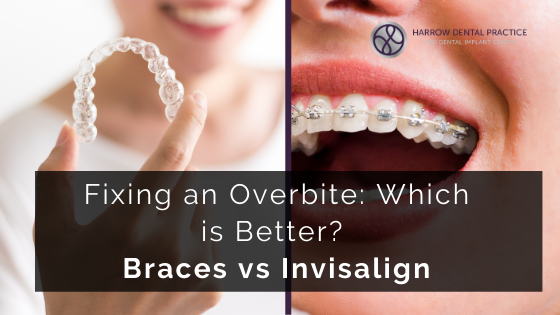
Fixing an Overbite: Which is Better? Braces vs Invisalign

Is it really true that Brits have bad teeth? Stereotypes aside, we’re not actually doing that bad with our teeth and with advances in oral healthcare technology, care is getting more accessible.

Take overbites, for example. People have a couple of options for fixing their overbite. Traditional braces or Invisalign, the new kid on the block.

Let’s look at Invisalign vs braces to help you decide which method is right for you.

What Is an Overbite?

Overbites are actually quite common. They can range from being a slight inconvenience to seriously affecting both your appearance and your oral health. Many people have overbites so slight that they never notice them or feel the need to fix them.

Those that do, however, may notice:

  • Trouble eating, especially biting into foods
  • Pain in the jaw
  • Soreness in the face
  • Worn teeth or uneven teeth wearing
  • Damage to the roof of the mouth inflicted by the lower teeth

Overbites can be caused by several things including excessive thumb sucking or overuse of pacifiers as a child, nail-biting, or hereditary factors.

What Is Invisalign?

Most people are already familiar with traditional braces. Metal brackets are attached to your teeth and the wires between them put gentle pressure on your teeth to slowly move them to the desired position. Modern braces come in tooth colours to make them more discreet, or you can pick a bold colour to flash a brilliant smile in a different way.

Invisalign braces follow the same idea but is a lot more discreet. Instead of filling your mouth with metal, you get clear plastic trays that you pop in your mouth. Unlike braces, Invisalign can be removed to eat, although it is recommended to wear the trays for 23 hours a day. That means that if you want to indulge in popcorn one day, you can!

Without all the metal and wires, Invisalign is much more comfortable. You must always remember to take them out to eat or drink anything besides water and you have to brush after every meal to avoid staining. Some people find it difficult to summon the self-discipline to wear them as directed.

When it comes to the Invisalign vs braces cost, braces typically win out. However, if you choose extras like tooth-coloured braces, they can get more expensive.

Invisalign vs Braces Effectiveness for Fixing an Overbite

One of the biggest benefits of braces is that they can be used to treat virtually all kinds of serious bite problems. Invisalign is only effective for people with mild bite problems. In recent years, the treatment has been equipped with rubber band capabilities, which has made it more capable of correcting overbites. However, braces are still the most effective option for intense work.

Find an Orthodontist Today

The main thing to be aware of when choosing orthodontics is to choose a qualified orthodontist. Someone with lots of experience can help you compare Invisalign vs braces and choose the best option for you.

Ready to get started? Check out a free consultation with our orthodontist here at Harrow Dental Practice in Hornchurch today!

Does Invisalign Hurt?

If you’re considering getting your teeth aligned with Invisalign removable aligners, then you might be wondering whether clear aligner treatment will be painful. Well, like all other orthodontic treatment options, aligners may cause some discomfort. But here is the good news! They won’t be as painful as the conventional metallic, ceramic, or lingual braces.

When Does Invisalign Stop Hurting?

When you start wearing your first set of aligners, you may feel a slight feeling of pressure or pain in your teeth. This is actually a good sign – as it indicates that the aligners are moving your teeth in the right direction. As you grow accustomed to your new aligners, this pain will gradually subside and go away in a few days.And are you

After wearing your aligners for about two weeks, feel that your aligners have become slightly loose. This indicates that your current set of aligners have done their job and it’s time to switch to the next set of numbered aligners.

When you wear the next set of aligner trays, you will again feel pain and pressure around your teeth, as they continue to realign your teeth. This is nothing to worry about! The feeling of discomfort and pain will go away as you continue to wear the aligners for a few more days.

How To Stop Invisalign Hurting When I Take It Off?

Taking the aligner trays off can be a challenging task for some. The key to removing your aligners is following the instructions of your dentist for orthodontist. Sometimes, removing your aligners with your fingers can cause significant pain and discomfort. If you use random ways of removing the aligners, not only will you experience pain but you may also damage your gums or cheeks in the process.

You can avoid this simply by using a small, but a really helpful tool – the OrthoKey. It is a small appliance that can easily fit into your aligner and allows you to remove your aligner without damaging them or causing pain. You may also use Invisalign Chewies for easy insertion or removal of your aligners.

Invisalign Pain In One Tooth, What’s The Cause?

Sometimes, one or more of your teeth require more pressure or force to realign then. If you have a tooth (or teeth) that are more crooked, rotated, or misaligned than the rest, then your orthodontist will design your aligners so that more force is applied to them in comparison to the others – to ensure that all your teeth are aligned optimally and equally aligned – when your treatment is completed.

In such cases, you might feel more pain in one or more of your teeth than the rest.

Invisalign Hurts My Teeth When I’m Eating, What’s The Cause?

Invisalign recommends that you should wear your aligners for at least 22 hours each day – only removing them for oral hygiene maintenance and eating/drinking. Invisalign aligners need to be removed whenever you eat or drink anything.

If you eat or drink while wearing your aligners, not only will it stain them but may also cause them to fracture or get warped. More importantly, the aligners will not allow you to chew your food properly, causing gastric problems or indigestion. Hence, best practice is to remove your aligners when you wish to eat or drink and then wear them back on after rinsing your mouth and washing the aligner trays.

Invisalign Pain Relief

The longer you wear your aligners each day, the quicker your teeth and oral cavity will become accustomed to them and the lesser pain you will feel. So, make sure you wear aligners for at least 22 hours each day. There are several ways in which you can mitigate Invisalign pain.

First, you can use orthodontic utility wax over where the aligners are hurt. Secondly, you can use your over the counter medication to relieve the pain. Additionally, many patients report that products such as Orajel are also quite helpful in reducing the pain. Eating a soft diet can also help in minimizing the Invisalign treatment pain.

Does Invisalign Hurt More Than Braces

One of the most common problems that patients report regarding metallic braces is the pain and discomfort they cause when they rub on the inside of your cheek. This problem has been eliminated with the Invisalign aligners. In addition to being more effective in treating mild to moderate orthodontic problems, Invisalign removable aligners offer superior comfort and convenience than conventional braces.

The aligner trays are fabricated from a medical-grade, flexible polyurethane material that helps move your teeth in the desired direction without causing significant pain or discomfort.

If you’re looking for an orthodontic treatment option that does not affect your facial aesthetics, and offer comfort and convenience, then Invisalign removable aligners should be your first choice. The process for getting the Invisalign aligners – from diagnosis to treatment planning – is simple and hassle-free.

Time to take action

If you’re looking for a Platinum elite Invisalign provider near Hornchurch in Essex then we are here to help, call us on 01708 479 717 or request an appointment online.

How to Stop Tooth Pain?

No matter what type of tooth pain you are experiencing, one thing is certain; it is one of the worst types of pain you can ever experience, more so when it pops out of nowhere on a Saturday at 2am in the morning! Good news is that there are ways you can manage most types of dental pain on your own, especially when expert dental help is not available.

Managing Dental Pain

Management of different types of dental pains involves diagnosing and treating the underlying issue. While complex issues such as injuries and infections require expert dental help, many dental problems that cause pain can be managed easily at home. There are some instances where tooth pain can result after having a dental treatment such as dental implants, or after recently having Invisalign fitted, if this is the case please speak to your dentist about this treatment.

One of the most common causes of dental pain is wisdom tooth extraction. Let us look at how we can manage wisdom tooth pain.

How to Stop Wisdom Tooth Pain?

Pain associated with a wisdom tooth can arise due to various reasons. First, it can occur if there is tooth decay, making the tooth sensitive to hot or cold foods. Secondly, wisdom tooth pain can occur due to pericoronitis, a condition in which the soft tissues around an impacted wisdom tooth get inflamed. Another painful situation can arise following the removal of a wisdom tooth.

In case you are having pain and swelling around one of your wisdom, then it may be because of pericoronitis. Management of this condition involves maintaining good oral health, taking painkillers to reduce the pain, and using icepacks to reduce the inflammation.

If the underlying cause of pain is due to inflammation then you can manage this situation with pain relievers, warm saline rinses, and icepack application around the region to minimize the inflammation. You can also apply oil of cloves around the tooth with a cotton ball to ease the pain, as it is a natural pain reliever.

Why Are My Gums Painful and Swollen?

Gums tend to become painful and appear swollen when they have underlying inflammation, a condition clinically known as gingivitis.

Clinically, gingivitis appears as swollen, reddish, and sore gums that tend to bleed easily while eating or brushing. Gingivitis can be easily managed with strict oral hygiene maintenance, and professional teeth cleaning if required.

If gingivitis is not treated timely, the inflammation can extend into the tissues that attach our gums to the teeth and the jawbone. This condition called periodontitis causes widespread destruction of the gum tissues, the bone, and the tissues supporting the teeth. As a result, the teeth become mobile if treatment is ignored for a prolonged duration.

Tooth Pain Months or Years After Root Canal

Toothache that occurs a few months or years after a root canal procedure can arise due to a variety of reasons. It may because of incomplete cleaning and disinfection of the tooth’s interior (the root canals), leaving behind bacteria that grow inside the root canals and cause future re-infection.

Another possible reason could be a missed accessory root canal – an extra root canal that is not normally found in that tooth – and is difficult to find. A missed root canal can lead to future re-infection, which is even harder to treat.

How do you Stop Toothache at Home?

When it comes to treating a toothache at home, there are several options you can utilize:

  • Pain Medication – pain-relieving medication not only helps in subsiding pain associated with a wisdom tooth or a sinus infection, but it is also helpful in reducing inflammation in the region.
  • Icepacks – icepacks help minimize inflammation and swelling at the site of the infection.
  • Natural Remedy – one of the best home remedies for stopping wisdom toothache is clove oil. Place a drop of clove oil on a cotton ball and apply it around the infected tooth. You will feel a significant reduction in your pain within 20 minutes of application of this home remedy.

Throbbing Tooth Pain That Comes and Goes, what is The Cause?

If you are having transient, throbbing pain in one of your teeth, it may be a sign of an underlying tooth abscess. An abscess refers to the collection of pus around infected teeth and gums. During the initial stages, the pain of an abscessed tooth can be managed with painkillers. However, in its advanced stages, the pain becomes unbearable, and the only option is to seek expert help immediately. An untreated abscess around the upper molar teeth can also lead to a sinus infection.

While the methods mentioned above are effective relieving wisdom tooth pain, these provide only temporary relief. Once your pain starts to subside, and you feel better, you must immediately book an appointment with your dentist so that the underlying cause of the pain can be diagnosed and treated accordingly.

How to Get a Perfect Smile

Do you often stand in front of the mirror and wish there was something you could do to improve your smile? The British orthodontic society is reporting that the number of adults seeking orthodontic treatment in the UK has risen recently by about 75%.

A beautiful smile is an invaluable social asset. It not only makes you look younger but also boosts your self-esteem and makes you look more attractive. A survey conducted by the American Academy of Cosmetic Dentistry revealed that a staggering 99.7% of the respondents believed that a beautiful smile is a priceless social asset. But while some are born with a Rockstar smile, others are not that lucky. But the good news is that no matter how flawed a smile is, you can still get a picture-perfect, naturally beautiful smile. How? Continue reading to find out.

How can I improve my smile?

Here are some tips that can help you in getting your dream smile:

Oral Hygiene Maintenance

A healthy smile is a beautiful smile. You cannot enjoy a charming and attractive smile without meticulous oral hygiene. Dentists worldwide recommend that you must brush your teeth twice a day and floss at least once a day for having those pearly white, perfect teeth! For best results, the British Dental Association recommends that you should use a soft toothbrush and a fluoride-containing toothpaste for either adults or children (be sure to purchase the correct one).

Regular Dental Check-ups

No matter how meticulous you are in brushing and flossing, your oral hygiene routine is incomplete without regular checkups. Your dentist can diagnose dental problems well before they are even visible to the naked eye, not only saving you from huge expenditures on treatment but also ensuring that you retain a beautiful smile throughout life.

Cosmetic Dentistry

Whether it is about restoring chipped or crooked teeth, restoring the balance between your upper lips and the size of your teeth, teeth whitening, or replacing missing natural teeth, cosmetic dentistry has the solution to all your aesthetic problems.

  • Veneers – a veneer is a thin shell of porcelain that is bonded the front teeth surfaces to restore tooth shape, function and aesthetics. Dental veneers are useful for the correction of the following cosmetic problems:
    • Chipped or fractured teeth.
    • Teeth with permanent stains
    • Cosmetic correction of excessive teeth gaps
    • Correction of mild tooth misalignment
  • Crowns – porcelain crowns are often referred to as a ‘cap’- they are shaped structures that are placed over the entire visible structure of a tooth. They are not only used for restoring tooth aesthetics but are also used reinforcing weakened teeth, owing to their excellent strength and durability. You can benefit from porcelain crowns in the following situations:
    • Grossly damaged teeth that cannot be restored with fillings
    • To mask permanent teeth stains
    • To restore the structure of chipped or fractured teeth
    • If you are not satisfied with the shape or size of your teeth, your cosmetic dentist will give you crowns to cosmetically reshape them and restore your smile.
    • To reinforce weakened teeth
    • To reinforce teeth that become brittle following a root canal procedure.
  • Dental Implants – Dental implants are by far the most aesthetically pleasing, functionally efficient and durable option for replacing missing natural teeth. An implant is a screw-shaped metallic fixture that is inserted into the jawbone, and it serves as the replacement root. Once the implant has become completely embedded within the bone, a suitable prosthesis such as a porcelain crown, bridge or a removable denture is then placed over it to restore the artificial tooth. Dental implants look, feel, and function just like natural teeth. If you shy away for smiling in public because of your missing teeth, then dental implants may be the best option for restoring your facial aesthetics and smile.

Perfect teeth alignment

Do you want to get rid of your misaligned and crooked teeth, but the thought of wearing those ugly metal braces is a deal-breaker for you? Don’t worry; you can still get a set of perfectly aligned teeth with Invisalign removable aligners. Invisalign is an orthodontic system based on the use of removable aligners. The aligners are designed from a special transparent acrylic material that makes them virtually invisible. Also, the Invisalign aligners are more comfortable and convenient in comparison to the conventional metal braces as they allow you to eat all your favorite foods and maintain optimal oral hygiene.

A beautiful smile not only makes you look gorgeous, but it can also bring joy and smiles to so many other faces! So, what’s stopping you? Book an appointment your cosmetic dentist today and impress your loved ones with your brand-new smile.

How much does a perfect smile cost?

The cost will always vary depending on exactly what treatment is required, So it’s very difficult to say exactly. Here are a few examples:

  • Teeth whitening – to get perfect white teeth £395
  • Composite bonding – to restore broken down teeth or reshaped teeth, from £250
  • Orthodontic treatment with 6 month smiles – from £3600

Many dental practices offer interest-free finance making treatments affordable and a monthly basis.


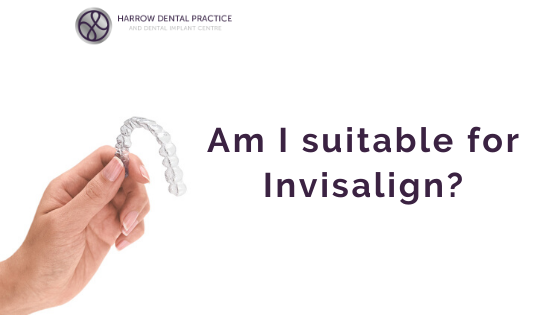
Am I eligible for Invisalign?

As it becomes more popular and as a wider range of treatments are included in the system, it becomes more suitable for a wider range of people… But how do you know if you are eligible for Invisalign?
In this article we’ll take a look through the different options available for people with different dental problems and of different ages.

The different types of Invisalign

There are primarily 3 different types of Invisalign:

  • Invisalign full
  • Invisalign i7, Invisalign lite or Invisalign Express
  • Invisalign teen

Let’s look at each and a little more detail

Invisalign full.

This is generally suitable for adults requiring orthodontic treatment to have straighter teeth using invisible braces. It will often move front teeth and back teeth on the top and bottom at the same time. Invisalign full treatments typically take anywhere from 1 -3 years.

Invisalign i7, Invisalign Lite or Invisalign Express

This is suitable for adults requiring more minor and rapid teeth straightening, typically of the front teeth only.  The official name is Invisalign i7 however different practices call this treatment different names, including Invisalign Lite and Invisalign Express.

It may be that you have a single tooth or a couple of teeth that have bothered you for a while and you would like them straighter. Invisalign i7 treatments typically take around 3 months.

Invisalign teen

Invisalign teen is based on the same Invisalign principle of using clear orthodontic aligners however, the teen braces have a Smart Track ™ material making them a little more comfortable and easier to take on and off.

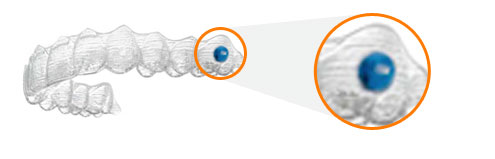
They also have Smart Force™ attachments which are little tooth coloured shapes which are attached to the teeth, this gives something for the aligners to grip, enabling them to move the teeth more predictably. They effectively work like little handles for the aligner.

Invisalign teen also has blue indicators which change depending on the amount of time the aligner is worn, this allows the parents and orthodontist to track compliance of the Child to ensure the braces are being worn for the specified amount of time.

Invisalign Teen Compliance Indicator

Who can wear Invisalign?

Invisalign is suitable for any adult or child who wishes to straighten teeth invisibly. Adults will normally have Invisalign full for complex cases or Invisalign Lite to move front teeth only. Younger people will usually be prescribed Invisalign teen as this is more suitable for their age.

Because Invisalign is completely clear and virtually imperceptible it is suitable for anyone wishing to have straighter teeth with no one knowing they are wearing braces.

5 benefits of Invisalign

Invisalign are clear!

  1. Virtually imperceptible.
  2. Removable, giving you the flexibility to take them out to eat and drink as well as to clean the aligners.
  3. Comfortable, made from a flexible material with no sharp brackets or wires to cause ulcers.
  4. Convenient, providing treatments in as little as 3 months.
  5. Predictable, using the latest 3-D technology to scan your teeth beforehand, provide you with an animated video of how your teeth will move plus track this movement throughout treatment.

Playing musical instruments

Playing musical instruments with any orthodontic treatment can sometimes be a challenge and you may have to adapt your embouchure. One of the big advantages of Invisalign is that you can take the aligner out to play your instrument, although it is worth bearing in mind that the aligners should be worn for at least 22 hours a day.

Some wind instruments, for example a clarinet may require the mouthpiece to be adapted or replaced after orthodontic treatment if it has become worn with other tooth marks that have moved from how the mouthpiece has worn.

How can I get Invisalign?

Because Invisalign is considered a cosmetic treatment it is not available on the NHS. Even if tooth alignment can be shown to be affecting health then the NHS will only provide traditional braces with metal and wires. Any treatment which has any cosmetic element, including clear orthodontics will need to be paid for privately.

Most practices offer affordable finance for Invisalign, typically this could bring treatment down to £42 per month * or just over £1 per day, less than the price of a cup of coffee!

The Invisalign process starts with a digital smile assessment using the Clincheck software, this can then work out the number of aligners you will require and how long treatment takes. This then dictates the final price.

You then have a digital scan of your teeth, Align Technology then manufacturer the aligners and send them back to your dentist, you then wear each aligner for approximately 2 weeks and then change it for a new one. This process continues throughout treatment.

You will always be closely monitored by your dentist to ensure treatment is progressing as planned and that you have no unforeseen problems.

Eligibility for Invisalign

Clinically this is determined by your dental health and current tooth position. You need to be dentally fit and healthy in order to move teeth, if you have good oral hygiene then you will usually be suitable for Invisalign treatment.


*  Total cost of Invisalign, £2500. £500 deposit and then finance for £2000. Subject to status. Conditions apply. Representative example. Cash price of goods/amount of credit £200060 monthly payments of £42.00; Total amount repayable £2520.22; Representative 9.9% APR variable.


How to Find an Orthodontist in Essex

How to find an orthodontist

The most important questions to ask when looking for an orthodontist

If you have crooked teeth and live in the Essex, Hornchurch area then you may well be looking for an orthodontist to help you straighten crooked teeth with braces.

But how do you know which dentist/orthodontist is best?

How do you know if you will get the treatment and service you are looking for?

In this blog post we go through some of the questions that we recommend you ask a dentist in order to help you decide if this is the right person for you.

How many years experience do you have?

The more cases your dentist or orthodontist have seen then the more likely it is they will be able to recognise the best course of treatment for you. There will also be more aware of potential problems which can arise from each of the different types of treatment, this means an experienced dentist or orthodontist may help you to avoid unforeseen problems in the future.

Which orthodontic systems do you offer?

There are a wide variety of orthodontic brace systems on the market, some systems are able to move teeth great distances, including back teeth. Some braces are more focused around the cosmetic anterior teeth.

Some systems offer rapid orthodontics whilst others offer low-cost and cheaper braces.

Whilst even more systems offer imperceptible orthodontics using clear aligners, clear brackets with tooth coloured wires or brackets on the tongue side of your teeth.

Ideally, visiting an Essex dentist which offers the widest range of orthodontic systems means you get the biggest choice and a system perfectly tailored to your requirements, clinical situation and budget.

Can you show me before and after photographs of previous cases you have treated.

Being able to see before and after photographs of cases similar to your own is a great way to understand the kind of results you can expect to achieve.

Be clear about what it is you want to correct, do you feel your top teeth stick out too much (overbite)? Is it that your top teeth are rotated and look crowded? Or something else? When you go to visit your orthodontist or dentist be very specific about what it is you don’t like and ask to see similar cases that they have treated before.

Can you show me reviews that patients have written about your orthodontic treatment?

Any good dental practice will gather together reviews and testimonials by happy patients. The key thing here is to see the reviews that have been left by patients that have specifically had orthodontics. That way you know that your dentist or orthodontist comes specifically recommended for the braces they offer.

How long will each treatment take?

Treatment times vary incredibly between different types of braces, anything from 9 weeks up to a couple of years! It really depends on the type of system and your clinical situation coupled with what you want to achieve.

Being very clear about how long you want the treatment to take, or even if you want it to be finished by a specific date or event can be really helpful when looking for an orthodontist to ensure you find one that offers braces which fitting with your timescale requirements.

What are the payment options for treatment?

As with many things in life orthodontic treatments can often be quite expensive. Asking about payment plans such as monthly or staged amounts or even 0% finance can make treatments much more affordable. Many orthodontic systems can be made available from as little as £42* per month.

How frequent will my follow-up visits the throughout the treatment?

Different dentists, orthodontists and braces systems have different follow-up protocols. Understanding how many times you may need to visit the dentist and how often can have a big impact on which dentist or orthodontist you choose.

In order to find this out you may find you need to have an initial consultation so that your clinician can take a look at the clinical situation and you can have a discussion about which brace system is right for you.

You will however typically need to visit the orthodontist or dentist once every 4-6 weeks for most orthodontic systems.

What levels of service and care will I receive?

We all know that service really matters, so what’s important to you about the service you receive? Would you like to communicate with the practice by phone, text or e-mail? Does the dentist or orthodontist offer the communication preferences you prefer?

Many practices offer online booking of appointments, is this important for you?

When you visit the practice, are you looking for a practice that is modern and new with the most up-to-date equipment?

Be clear about what it is you want to receive and what’s important to you, you can then look for clues as to whether the practice can offer this as well as asking them directly.

What hours do you open?

Many people work long and unsocial hours. If you need an orthodontist in Essex, local to you,  then it’s important to find one that fits around your schedule.

Ask about early mornings and late evening appointments, you may also find that some practices offer Saturday appointments which can be useful if you live locally.

The last thing you want is a dentist where you are required to visit once every four weeks at appointment times that don’t fit in with your schedule, that can mean that your orthodontic appointments come delay and treatment times can then extend beyond what you initially expect.


*Subject to status. Conditions apply. Representative example. Cash price of braces £2000; 60 monthly payments of £42; total amount repayable £2520.22; representative 9.9% APR variable

The best ways to reduce swelling after lip fillers

As more and more people begin their journey to plumper and fuller lips with lip filler injections we are finding that more people are asking about some of the side effects, specifically the best ways to reduce swelling after lip filler injections.

Lip fillers are great way to add volume and achieve a softer, fuller and perfectly kissable lips, the use a small injection which places a small amount of hyaluronic acid into your lips. Hyaluronic acid is a naturally occurring chemical in your body and so is perfectly safe and healthy to use.

There are however sometimes some side-effects to the lip injection treatment.

How much swelling is normal after lip fillers

After any invasive treatment, even if it is a small needle there is likely to be small amount of swelling afterwards. This should reduce very rapidly, often within hours.

For the full effect of the filler treatment become apparent you will need to wait approximately 3 or 5 days in order for any initial treatment swelling to completely subsided.

Lip filler swelling stages in days

  1. After the first day the bulk of any swelling should have subsided.
  2. By day 2 the initial swelling will have gone and you will start to see the full effects of the treatment.
  3. By this day the bulk of any pain should have gone, the primary swelling from the injections will have subsided.
  4. On the 4th day after treatment you can expect for all of the swelling to have gone  and to see the full effect of treatment. All pain and tenderness should also have subsided by day 4

How to hide any swelling

Try these following tips to hide and reduce swelling:

  • Apply ice to the area to restrict blood flow, place it in a plastic bag to prevent getting wet and then wrapped the plastic bag in a tea towel to avoid direct ice contact with your lips.
  • Make sure you drink lots. Keeping fully hydrated allows your body to mobilise fluids, rather than store them in single places (swelling) staying hydrated keeps the flow of fluid around your body.
  • Avoid strenuous exercise and increasing your heart rate.
  • Rest and protect your lips. This means no hard kissing for 48 hours!
  • Avoid drinking through a straw for 2 days, this can also put pressure on your lips and exacerbate any swelling.

Do lip injections damage lips

If the injections are done professionally then no, they don’t damage the lips. The injections use a naturally occurring acid (hyaluronic acid) which is readily absorbed back into the body, with no common side-effects.

Swelling a few months after filler treatment

Swelling after a few months could be due to a few reasons:

  • Late onset inflammatory response to hyaluronic acid.  This is a rare complication which can occur 4-5 months after treatment but in extremely rare cases up to 14 months after. This information is readily treatable with oral steroids.
  • Edema.  This is where an excessive amount of fluid buildup in or around the cells or tissue of the body, it is  a normal response and almost everyone will experience it. It is most commonly considered a minor complication and very rarely can become a serious or major complication. Typically 10-50% patients will have this type of swelling. Gentle massage of the area can help to reduce the swelling
  • Lip filler lumps. These are not a normal reaction and are usually caused by incorrect technique or by the practitioner is not using the correct lip filler product. small lumps can usually be removed by massaging the area, however if you have a larger lumps then it may be the sign of allergic reaction so visiting your practitioner again is advised.

Un-even swelling after lip fillers

Uneven swelling could be caused by any of the areas listed above but is most likely due to operator error. If your practitioner removes the needle from the lips whilst they are continuing to inject the hyaluronic acid it can mean that the filler is injected into the incorrect area, it can then lay in the outer areas of your lips and cause these un-even swellings.

Likewise, if the viscosity of the filler is too high and can’t be injected well enough into the chosen area this can also lead to an uneven amount of filler, uneven lips and bumps are a result.

This is why it’s incredibly important to select your practitioner carefully, ensuring they have adequate training, not only to do the injection in the first place but to help you with any problems later on.

Bruising after treatment

After any form of injectable treatment some mild bruising  should be expected. It can be helpful to use a dark coloured lipstick in order to  cover up any mild bruising on your lips after the injections, you should however wait for 24 hours before applying any make up.

When you go to bed that night, sleep with your head slightly raised if possible and avoid any undue pressure on your lips (including kissing) for 24 hours, this will then keep the bruising to a minimum.

A great tip is not to book your injectable treatment the day before you are going to an event, people often ask for their practitioner not a bruise them as they go into an event the next day, unfortunately any injectable treatment does come with a bruising risk. Always have your lip filler treatment approximately one week prior to any important event, this gives time for the bruising and any swelling to subside.

references:

Lip filler side-effects, precautions and contra indications

https://www.ncbi.nlm.nih.gov/pmc/articles/PMC2890129/

late onset inflammatory response

https://www.ncbi.nlm.nih.gov/pmc/articles/PMC5889432/

Please note that this article should not be considered medical advice, diagnosis or used for any home treatments.

download a free information pack

A 14 page report full of the most useful information, “Your Essential Guide to facial aesthetics & healthy, vibrant looking skin.”

The costs and lowest price alternatives
Your options and choices for treatment
Are you suitable for treatment?
How do Botox type treatments and Dermal Fillers compare?
How long does treatment take?
Plus lots more…

download free guide now

free botox guide in Hornchurch

How long do veneers last?

So you’re thinking about getting dental veneers? Or perhaps you have just had dental veneers and want to know useful information about how long they are going to last?

We will answer a series of questions that people commonly ask about dental veneers, each of them taking a different viewpoint on the overall question of how long do veneers last.

Is it a bad idea to veneer healthy teeth?

This is a good place to start our journey into looking at dental veneers, should you have them in the first place and should they be used over healthy teeth?

There is always a balance in dentistry, balancing the health of your teeth and gums with how you look. Ideally most dentists would want to maintain as much natural healthy tooth structure as possible, however in some circumstances teeth can be very dark (such as with tetracycline staining), and ugly shape or broken down.

dental veneers
Dental veneers showing the small amount of tooth removed prior to the veneer being placed

Generally speaking dental veneers require 0.5 mm of reduction of 2 separate in order to accept the new custom-made veneer. This is a very small amount but if your natural teeth have already begun to wear this may go all the way through the enamel and into the softer dentine underneath.

A veneer will have a border all the way around the edge where it meets the natural tooth and it is often this border which causes any problems. If any small amount of bacteria gets in underneath the veneer then they can cause decay in the underlying tooth.

Dental veneers may also fracture, if this happens the veneer will need to be completely removed and manufactured again.

For these reasons it is best to err on the side of caution and leave natural teeth as they are… Unless they cause you concern due to the way they look.

This is when the balance tips the other way, if the benefits of having a new, bright and fresh smile outweigh any of the downsides of having natural tooth surface removed.

Veneers are then absolutely the right thing to do.

Can you get veneers with gum disease

Gum disease typically means that the oral health isn’t quite as good as it could be. If the oral health isn’t as good as it could be for veneers, then  it is indicative that it will not be as good after veneers, and veneers need to be looked after as well as natural teeth do.

Gum disease  can include swollen, puffy and bleeding gums, this can make the process of having veneers difficult in the first place, plus the margin between the veneer and the tooth could irritate these already irritated gums and therefore make the gum disease worse.

Prior to getting veneers any dentist will want to ensure that the oral health is in good condition, with a good oral health care routine with daily brushing. Then, and only then should veneers be considered.

Are veneers permanent

Because veneers are a thin layer which is applied over the surface of the natural teeth many people consider them to be temporary. However, your tooth is likely to have been trimmed down slightly by the dentist to accept a veneer, for this reason, dental veneers should always be considered a permanent treatment.

In some circumstances a dentist may be able to apply a thin layer of composite resin to the surface of the tooth without reducing the tooth. If this is what the dentist does then it may be possible to remove the raising and therefore remove the veneer.

What is life like with veneers?

living with dental veneers should be virtually the same as living with natural teeth. Daily cleaning with a brush, floss and mouthwash is still advised and is in some ways more important with restorations.

One of the biggest problems with veneers they can chip and crack, particularly porcelain veneers. The highest incidence of these happens when people accidentally banged their teeth on a glass or mug, this porcelain on porcelain contact often can chip the veneers.

All that is required for living with dental veneers is to remember that dental veneers are fitted, be careful with the foods that are eaten to ensure that the front teeth on used an extremely hard foods… And be careful with those drinks!

How long does tooth bonding last?

Tooth bonding is the process of applying a thin layer of composite resin the outer layer of the, often known as composite veneers or immediate veneers. the advantage of this type of veneer is that they are quick to do, often being done in a single appointment with no injection. They do however have a tendency to pick up stains including red wine, coffee and tea.

A typical tooth bonding veneer will last between 5 and 7 years before it needs replacing. This time can be dramatically reduced is particularly strong coloured foods are ingested and/or the veneers are put under too much stress and they break.

How long do veneers last?

It depends on which type of veneer you have, with proper care and attention:

  • composite bonding veneers typically last 5-7 years
  • porcelain veneers typically last 10-15 years

Veneers may last slightly less time if you grind your teeth, although this will be spotted by your dentist prior to having veneers in the 1st place.

Summary

Taking the average lifespan of the dental veneer to be around 10 years puts the typical cost of a porcelain veneer to about £85 per year,  if you care for your veneers  with good quality dental care than they could last even longer.

If you follow the dental procedures outlined above and take good care of your teeth then your veneers should give you long and excellent service.

More information can be found here.

DOWNLOAD A FREE INFORMATION PACK

free cosmetic dentistry guide in HornchurchA 22 page report full of the most useful information, ideal if you’re thinking about having dental veneers

  • The costs and lowest price alternatives
  • Your options and choices for treatment
  • Are you suitable for treatment?
    How does each treatment compare?
  • How long does treatment take?
  • Plus lots more…

download free guide now

Teeth Names and the Tooth Numbering System

Ever wondered what your dentist was talking about when they are describing your teeth to the nurse? When they say that tooth “44” as a filling… Which tooth is this?

One of the top dental searches on Google is for teeth names and also for the numbering system used to classify each of the human teeth. There is also a difference between the standard numbering systems in the UK and the international system so will go through both of these in this article.

There are quite a few different ways of using a notational system, including the international standard or universal numbering system which is widely used internationally. Let’s start by looking at the teeth names first…

The Names for Adult Teeth

Starting at the tooth in the front and working backwards the tooth names are:

  1. Central.
  2. Lateral.
  3. Canine.
  4. 1st premolar.
  5. 2nd premolar.
  6. 1st molar.
  7. 2nd molar.
  8. 3rd molar.

This is the same on the left and right side making 16 teeth on the top, it is also reflected on the bottom with another 16 teeth making 32 teeth in total.

tooth names

Adult tooth numbering system

Very often in the UK the Palmer notation method is used, this was named after Dr Corydon Palmer a dentist from Ohio. It uses a simple system to represent the quadrant in the mouth and whether it is up, lower, left or right. It is always indicated by the PATIENTS left and right, never the person sitting opposite the patient and viewing.

Palmer tooth notation

So if a dentist wanted to talk about the permanent dentition 1st premolar on the right-hand side (remember it’s always the patient’s right) you would hear them talk about upper right 4, sometimes abbreviated to UR4, this would then have the notation:

upper right 4

… They would be talking about this tooth…

1st premolar tooth notation

The last tooth in the mouth, the 3rd molar, numbered 8 is what is otherwise known as the wisdom teeth. These can be problematic as there is often not enough room in the mouth meaning they can be impacted and push against the other teeth.

International Standards Organisation

In addition to both the methods above there is also the ISO system which is used widely by dentists internationally. It uses a 2 digit system, the 1st digit indicates the quadrant as follows:

  1. upper right
  2. upper left
  3. lower left
  4. lower right

In the ISO system, the 2nd number indicates which tooth, start counting from the front tooth and work backwards.

international standard organisation notational system

The uses of different teeth

There are different types of teeth in the mouth or groups of teeth, they all have specific uses:

  • Incisors for biting into food and tearing off bite-size pieces.
  • Canines for sharper biting forces concentrated into a point and also, historically for display in our ancestors. Think of a gorilla who has large canines but does not use them for tearing food, rather they are used for display.
  • Premolars and molars for grinding food into smaller sized amounts.

The names for children’s teeth

Baby teeth are also known as deciduous teeth, they are the primary teeth that a human has and are lost in early childhood through to teenage years. This is because an adult needs larger teeth but the baby jaw is not big enough for them to come through at the beginning. Starting at the tooth in the front and working backwards the tooth names are:

  1. Central.
  2. Lateral.
  3. Canine.
  4. 1st premolar.
  5. 1st molar.

This is the same on the left and right side making 10 teeth on the top, it is also reflected on the bottom with another 10 teeth making 20 teeth in total.

Most commonly they are referred to in lettering format.

  • A – Central.
  • B – Lateral.
  • C – Canine.
  • D – 1st premolar.
  • E – 1st molar.

With deciduous teeth many people believe there is no need to look after the children’s teeth as much as possible, after all, the permanent teeth are going to come through afterwards so what is the point as they will have another set of teeth, right?

This however is a dangerous viewpoint.

If children get into bad habits by consuming large amounts of sugar or not following a good oral health care routine then those habits will inevitably work their way through into teenage years and affect adult teeth as they erupt.

If a child has dental decay then the bacteria will be present in the mouth, the higher level of bacteria can then mean that the permanent teeth are also subject to a higher risk of decay.

On top of all of this the bacteria which cause dental decay have also been shown to cause other problems in the body, this could then put the child at risk from a wide variety of other health-related issues.

In summary

If you have any concerns about your teeth in any way at all please do contact your local dentist who will always be happy to help. We recommend taking the children to the dentist as soon as the teeth begin to wrapped as babies, this can help to get used to the dental environment and allow your dentist the opportunity to monitor the baby tooth development as it happens, always watching out for gum disease.