





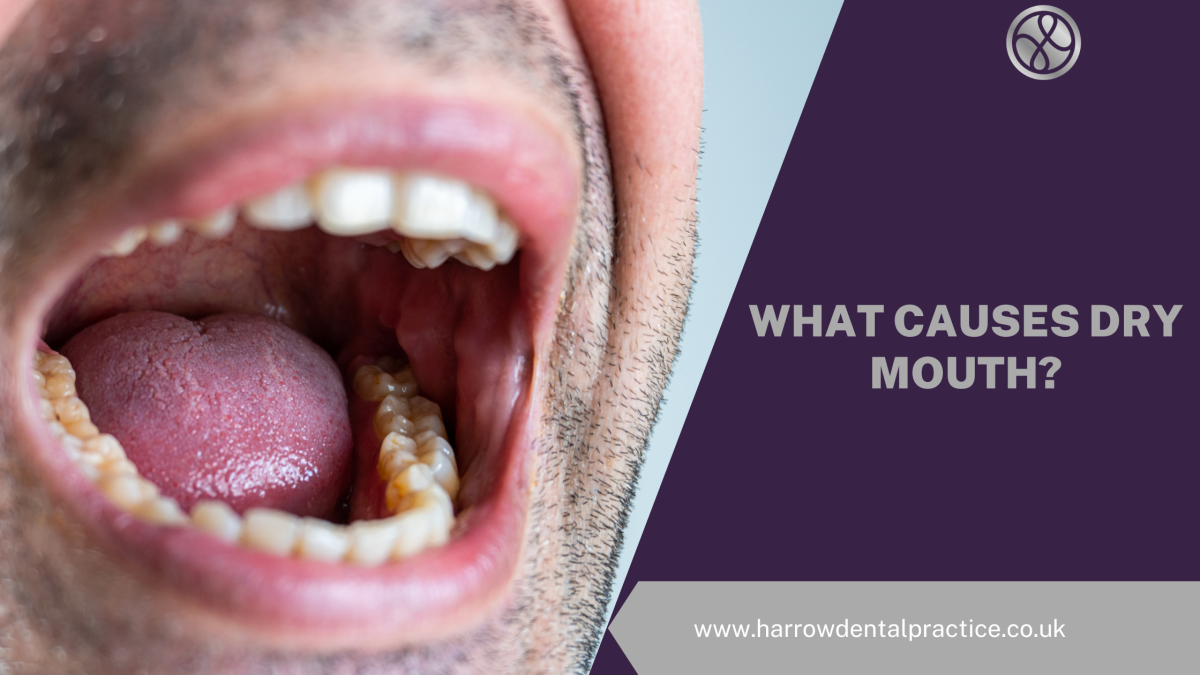
What Causes Dry Mouth?

Do you have a constant feeling of dryness in your mouth? Are you troubled eating or speaking because of insufficient saliva in your mouth? If yes, you may be suffering from a condition called dry mouth. Unfortunately, dry mouth is quite a prevalent condition in the UK. According to the NHS, one in every four British adults suffers from dry mouth. If you want to know more about what causes dry mouth and its treatment, this blog is for you. 

Continue reading until the end to learn everything you need to know about this condition. 

What Is “Dry Mouth”?

According to the American Dental Association, dry mouth, also known as Xerostomia, is a condition characterised by the feeling of dryness in the mouth. Dry mouth can occur for various reasons, and it isn’t always an indication of an underlying serious condition. 

Why Am I Experiencing Dry Mouth All Of A Sudden?

A sudden feeling of dryness in the mouth could be due to various reasons, such as dehydration, mouth breathing while sleeping, and certain medications. Besides, it could also be due to various underlying conditions such as diabetes and salivary gland disorders. 

What Is The Difference Between Dry Mouth And Xerostomia?

Both dry mouth and xerostomia refer to the same thing. Xerostomia is the scientific term dentists and doctors use to describe the feeling of dryness in the mouth. So, dry mouth is a “layman” term, while xerostomia is the scientific name for this condition. 

How Does Ageing Contribute To Xerostomia (Dry Mouth)?

The likelihood of xerostomia increases with age. Research statistics show that over 30% of adults over 65 and 40% over 80 years suffer from this condition. However, according to the US National Institutes of Health, the risk of xerostomia doesn’t increase directly because of ageing. Instead, it is linked to an increased risk of systemic conditions that affect salivary production or flow with age. Moreover, the elderly are more likely to take various medications that can cause dry mouth as a side effect. 

What Can I Do About Dry Mouth Caused By Medication?

As mentioned earlier, dry mouth can also be caused due to various medications. If you’re feeling dry mouth after taking a new medication, it is most likely a side effect of the medicine. In such cases, your dentist will discuss with your general practitioner so that they can advise you on an alternative medication. In most cases, dry mouth condition goes away as soon as the causative medication is discontinued. However, if left untreated, it can cause various complications including tooth pain and detnal cavities.

What Are The Best Foods And Remedies For Dry Mouth?

There are a few things people with dry mouth can do to ease the condition. 

  • Hydration – This is one of the effective ways to offset dry mouth. Sipping water throughout the day helps keep the mouth moist. 
  • Sugar-free Chewing Gum – Did you know that eating a chewing gum helps stimulate the salivary glands? As a result, the flow and production of the saliva are enhanced. However, one should chew a sugar-free gum because sugar-containing gums can increase the risk of tooth decay. 
  • Soft Diet – Soft, moist foods such as stews, scrambled eggs, and soups are easier to eat with a dry mouth. 
  • Artificial Saliva – Saliva substitutes are easily available in the market and can be used to keep the mouth moist. 

These measures will only provide symptomatic relief. For comprehensive treatment, the underlying issue should be diagnosed or treated by a healthcare practitioner. 

What Is The Link Between Dry Mouth And Bad Breath?

One of the major roles of saliva, besides keeping our mouths moist and aiding in chewing/digestion, is that it keeps the mouth clean. Saliva constantly flows in the mouth and provides a bathing and cleansing action, thereby helping maintain good oral hygiene. In patients with xerostomia, this bathing action is affected, and plaque or tartar deposits begin to form on the teeth. Over time, degradation of the adhered food particles results in a bad odour, resulting in bad breath and gum disease. This is why people suffering from dry mouth often complain of oral malodor. 

How To Treat Dry Mouth?

The treatment of dry mouth mainly depends on identifying and treating the underlying issue. Dry mouth can occur due to two reasons: due to reduced salivary flow (blockade) or its production. Your dentist will perform a detailed clinical examination to ascertain the underlying cause. 

If your dentist feels that your dry mouth is due to a non-dental reason, they will refer you to your family doctor. Some of the non-dental reasons for dry mouth include:

  • Certain medications 
  • Systemic illnesses such as diabetes or Sjögren’s syndrome
  • Salivary blockade due to stones in the salivary duct
  • Physical damage to the salivary glands due to trauma or radiation 
  • Salivary gland tumours 

If the dry mouth is due to a medication, your doctor will replace it with another one. On the other hand, if the problem is due to salivary duct blockade, they will consider various surgical or non-surgical options to remove the stone and relieve the pain. Finally, if it is due to a tumour, your dentist will consult with a maxillofacial surgeon to remove it. 

If you or a loved one is experiencing dry mouth, they shouldn’t take this condition lightly and visit a dentist immediately. If you live in Essex, you should visit Harrow Dental Practice and Dental Implant Centre for all your dental concerns. We provide high-quality dental services at affordable prices and under one roof. Click here to make an enquiry. We look forward to serving you. 
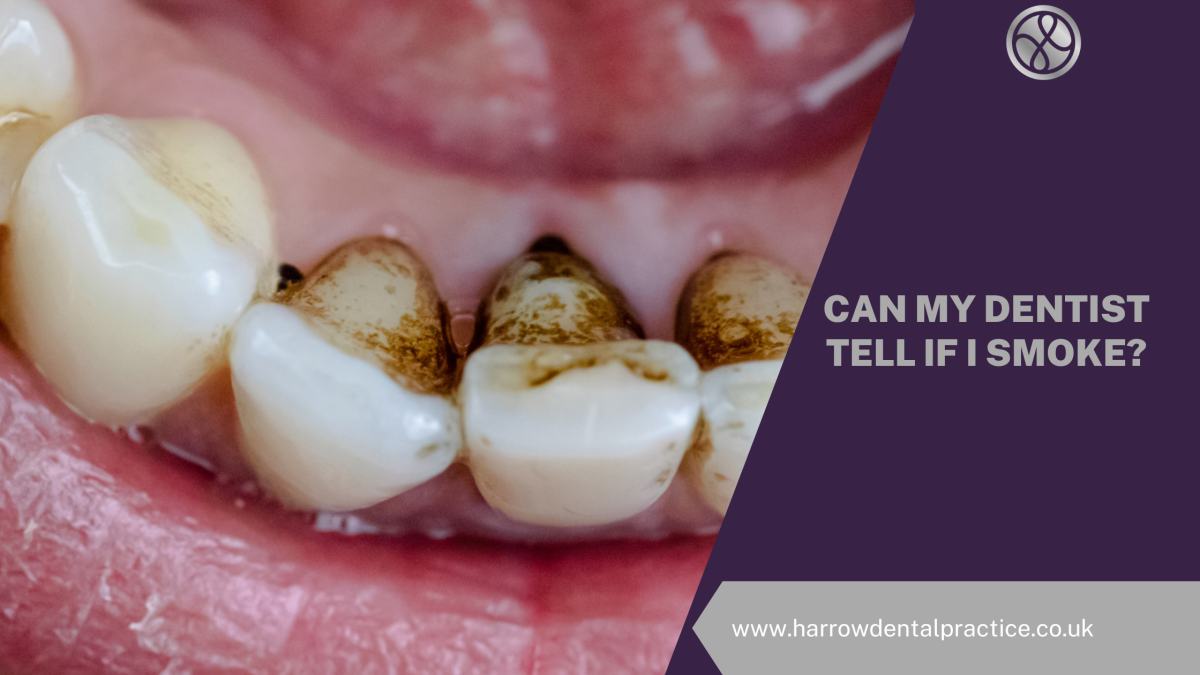
Can My Dentist Tell If I Smoke?

Did you know that around 6 million adults in the UK are smokers? Moreover, over 5.1 million British adults use e-cigarettes for smoking. While smoking is known to affect one’s physical health, it has also been shown to have a detrimental effect on one’s oral health. So, if you’re worried that your dentist can tell if you smoke, yes, they can! 

But how can my dentist tell if I smoke? You may ask! You will find the answer to this question in this blog. So, read this blog till the end to learn more about smoking and its effect on your oral health. 

Can Smoking Affect My Mouth And Oral Health?

According to the Oral Health Foundation, smoking can directly affect one’s oral health. For example, persistent smoking can lead to various oral health-related complications such as teeth staining, bad breath gum disease, dry mouth, and even tooth loss. More importantly, studies have shown that smokers are at a higher risk of developing oral cancer than those who don’t smoke. 

Can A Dentist Tell If You Smoke Occasionally?

Smoking-related complications, such as teeth staining or gum disease, may not be visible in your mouth if you smoke occasionally. However, if you are a frequent smoker, there will be signs in your mouth from which your dentist can tell that you’re a habitual smoker. Two of the most oral health-related signs that can tell if you smoke are bad breath and yellow or brown staining of the teeth caused by tobacco.

Why Do Dentists Ask If You Smoke?

When you visit your dentist, they may ask if you are a smoker. This is because smokers are at higher risk of developing various dental complications like gum disease, dry mouth, or tooth loss than non-smokers. Furthermore, there is a higher risk of oral cancers among smokers. Therefore, dentists take additional care while examining the oral cavity of smokers to detect any underlying complications. 

What Can A Dentist Tell From Your Mouth?

Your dentist can tell a lot of things about your oral health, physical well-being, and habits just by looking at your teeth. For example, they can tell if you brush or floss your teeth regularly by the absence of gum swelling, teeth stains or plaque deposits on your teeth. Similarly, dentists can also detect various medical conditions by examining your teeth. In fact, dentists often detect developing medical issues during routine dental examinations. 

Can I Vape With Braces?

It is not recommended to vape with braces. This is because vaping can affect your gum health which directly influences the movement and realignment of your teeth. Hence, vaping may cause oral health complications that may slow down your treatment progress. 

How Can We Vape Without Getting A Dry Socket?

Dentists do not advise using a vape after getting a tooth extracted. This is because vaping can cause a condition called dry socket. In this condition, a good-quality blood clot fails to form inside the extracted tooth socket, thereby delaying healing. 

But what is the link between vaping and dry sockets? According to Healthline, nicotine in vape formulas restricts blood flow to the extraction socket, increasing the risk of a dry socket. Besides, there are various toxins in vaping formulas that significantly increase your risk of this complication. So, it is not recommended to use a vape after having one’s tooth extracted. 

Why Does Vaping Cause Bad/Sour Breath?

Some ingredients of vape formulas, such as propylene glycol, can cause a condition called dry mouth. In this condition, there is a reduced flow or production of the saliva resulting in incomplete cleaning of the oral cavity. As a result, plaque and tartar deposits form on the teeth which can lead to bad breath and other complications such as gum disease

How Can Dry Mouth Affect Your Oral Health?

One of the functions of saliva is to bathe our teeth and clean them. Frequent vaping or smoking restricts the production or flow of saliva, resulting in plaque and tartar buildup on the teeth. These deposits can cause various complications such as gum disease, bad breath, and even tooth loss. 

Can A Heavy Smoker Do A Dental Implant?

Heavy smokers have a higher risk of developing gum disease than non-smokers. In the advanced stages of gum disease, there is extensive bone loss in the jaws. Since the success of implant therapy is directly dependent on the quality and volume of the available jawbone, smokers tend to have a higher risk of implant failures than non-smokers. 

If smokers need a tooth implant, they should cut down on their habit and ensure optimal oral hygiene for some time to allow for the healing of the damaged tissues. Once optimal healing has taken place, their dentist will proceed with the implant placement procedure. However, smoking should be avoided even after implant placement as it can hamper the healing process.  

Why Doesn’t Smoking Affect Celebrities’ Teeth?

Vaping can cause inflammation of the gums and teeth staining, even in celebrities. However, these signs are not visible in celebrities because they mask these defects with cosmetic dental treatment. But one thing that should be kept in mind is that this type of cosmetic dental treatment is not the solution. It will only mask the issue. In fact, cosmetic dental treatment should not be done when someone is suffering from gum disease. So, the best solution is to restrict the habit of smoking or vaping. 

If you are concerned about your oral health due to smoking and are looking for the best dentist in Essex, your best option is to visit Harrow Dental Practice and Dental Implant Centre. We offer the highest-quality services to our esteemed patients. Whether you have teeth stains or bad breath due to smoking, our experienced dentists will take care of it. So, click here to make an enquiry and let us take care of the rest.